Skip the humidity dome. A Texas rat snake comes from dry, rocky parts of Texas and Oklahoma, and that background matters more than most care sheets admit. Copy the humid setup that generic “rat snake” guides push, and you’re setting your snake up for breathing problems down the road.
This snake needs a drier enclosure than its cousins, plenty of climbing room, and a lid that actually locks. Get those three things right and the rest of the care routine is pretty simple.
Enclosure Size: Adults Need More Than a Rack Tub
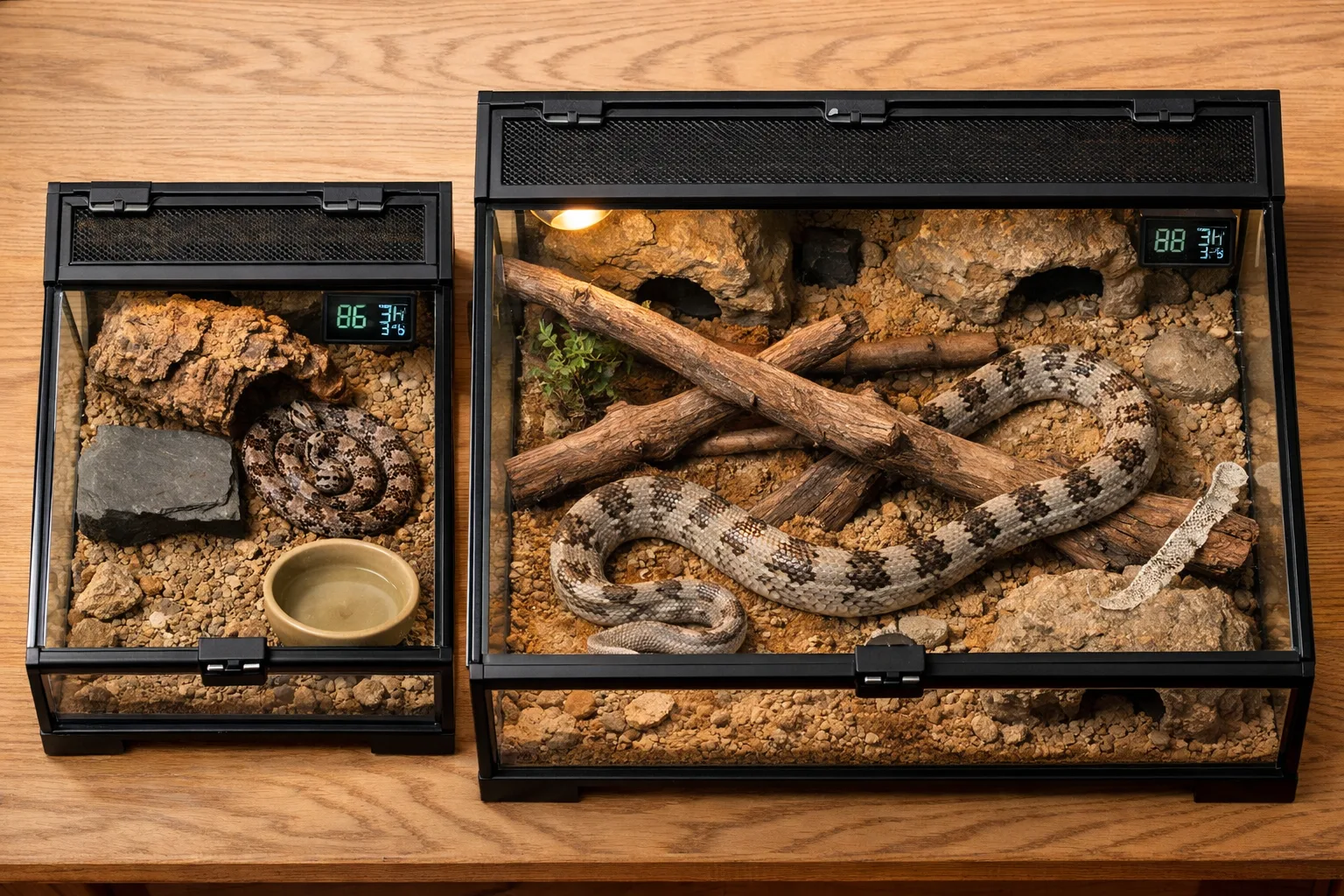
A juvenile Texas rat snake can start in a 20-gallon long tank, but an adult needs a minimum of 40 gallons, and honestly a 4-foot by 2-foot enclosure is better. These snakes get to 4-6 feet long and they’re active climbers, not couch potatoes like a ball python.
Juvenile vs. Adult Housing
Hatchlings and young snakes under about 18 inches do better in smaller tubs (10-20 gallons) because big open spaces stress them out and make food harder to find. Once your snake hits 2-3 feet, it’s time to upgrade. Waiting too long isn’t dangerous, but it does slow growth and can make a snake feel exposed and jumpy in a tank it hasn’t grown into yet.
Vertical Space Matters as Much as Floor Space
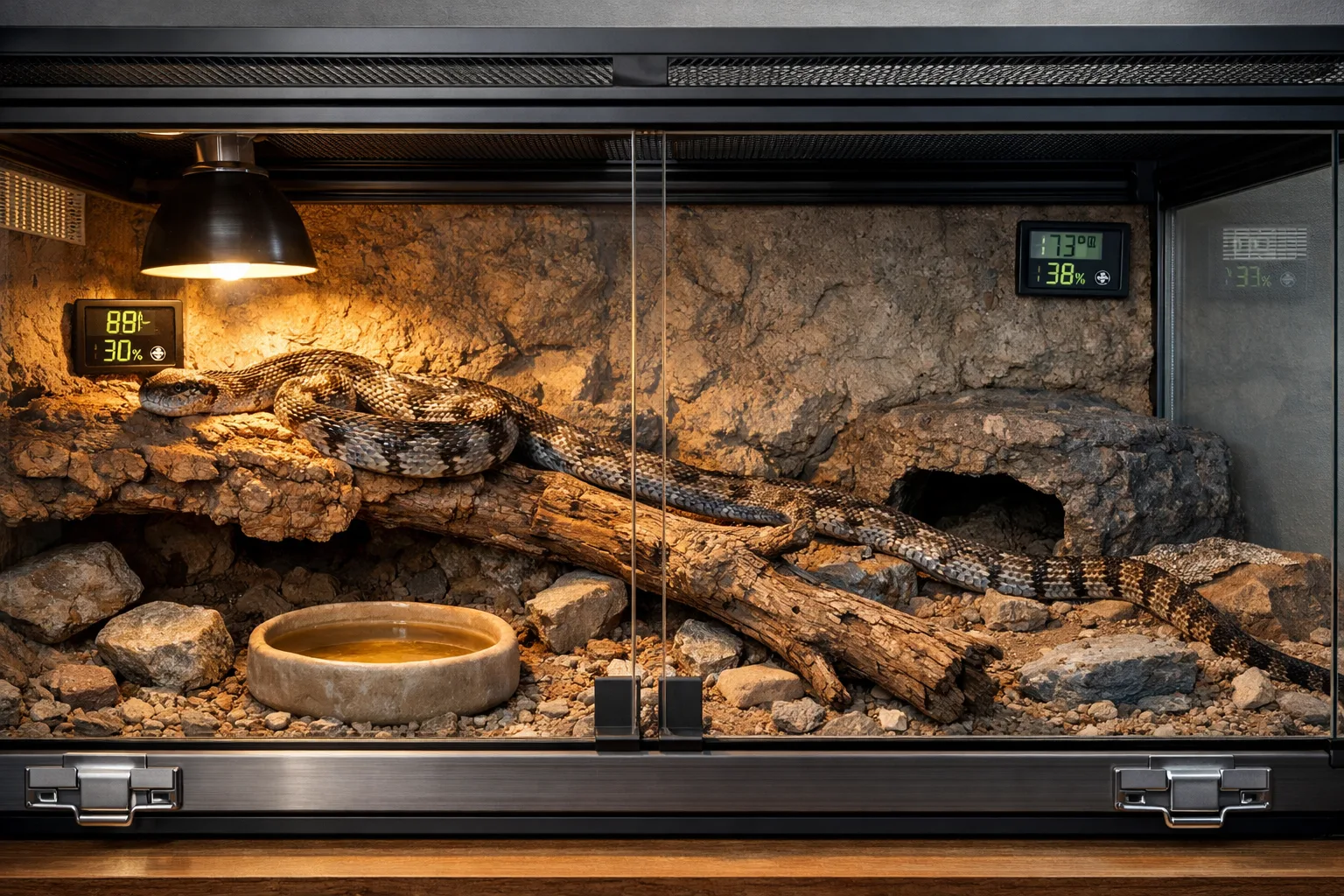
Texas rat snakes climb constantly in the wild, using trees, fence posts, and barn rafters. A tank that’s all floor space and no height wastes the space you’re paying for. I’d aim for at least 18-24 inches of vertical clearance for an adult, with real branches (not just decorative ones) angled across the tank.
Locking Lids Aren’t Optional
These snakes are escape artists. A snake that can push open an unlatched screen lid will do exactly that within its first week home. Use a top with cam locks or clip latches, and check every gap where wiring or tubing enters the enclosure — a snake this size can squeeze through a surprisingly small crack.
Substrate and Humidity: Why “Standard Rat Snake” Advice Gets This Wrong
Most rat snake care sheets recommend cypress mulch or coconut fiber kept slightly damp, aiming for 60-70% humidity. For a Texas rat snake, that’s too wet, and it’s the single biggest mistake new owners make with this species.
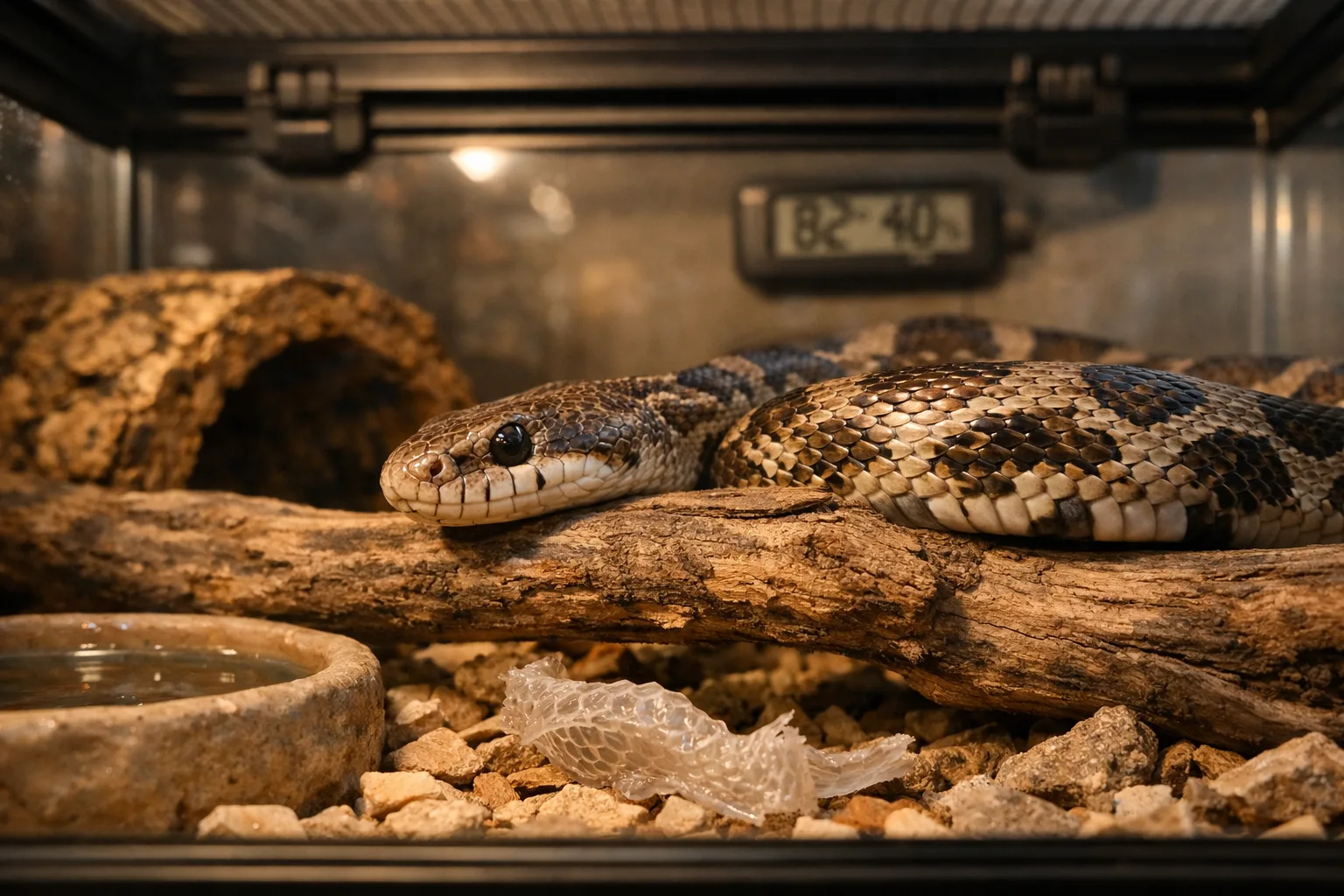
This subspecies comes from semi-arid country. In captivity it does best around 40-50% humidity, with a brief bump to 60% during shedding. Keep humidity in the 60-70% range full time and you’re inviting respiratory infections — labored breathing, mucus around the nostrils, open-mouth breathing are all signs it’s too damp in there.
For substrate, aspen shavings are the top choice for this species. They hold their shape for burrowing, they don’t trap moisture, and they’re cheap — a large bag runs about $12-15 and lasts weeks. Avoid anything marketed as “tropical” bedding blends; they’re built for species with the opposite needs.
A quick way to check yourself: if you can squeeze the substrate and get any water out, it’s too wet for this snake.
Temperature Gradient and Lighting Setup
A Texas rat snake needs a basking spot around 88-90°F and a cool end sitting at 75-78°F, with an overnight drop to around 70°F being fine. Skip the thermal gradient and you’ll see a snake that can’t digest food properly, refuses meals, or just sits in one spot looking stressed.
Run a halogen or ceramic heat lamp over one end of the tank, controlled by a thermostat — not just a dimmer, an actual thermostat like a Herpstat or Vivarium Electronics unit, because heat lamps without one are a real fire and burn risk. A digital probe thermometer at both the basking spot and the cool end tells you what’s actually happening, not what the dial says.
UVB isn’t strictly required for snakes the way it is for many lizards, but a low-output UVB bulb (something in the 5.0 range) run for 10-12 hours a day seems to support better appetite and more natural behavior in a lot of keepers’ experience. It’s a nice-to-have, not a must-have, but I’d add one if your budget allows the extra $25-40 for a fixture and bulb.
Zone
Target Temp
Notes
Basking spot
88-90°F
Heat lamp + thermostat
Cool end
75-78°F
Ambient room temp often works
Overnight low
68-70°F
Natural drop is fine, don’t force it
Humidity
40-50%
Bump to 60% only during shed
Feeding, Handling, and Shedding: The Weekly Routine
Feed juveniles appropriately-sized mice every 5-7 days, and adults a mouse or small rat every 7-10 days. Always offer a water dish big enough for the snake to soak in, since some individuals will do this on their own before a shed even without high ambient humidity.
Handling a Texas rat snake is generally easy once they settle in. This isn’t the calmest rat snake subspecies out there, though. Younger snakes especially can be quick to musk or strike when startled, so I’d give a new snake two weeks to settle before regular handling starts.
During shedding, resist the urge to raise humidity across the whole tank. Instead, add a humid hide, just a small box with damp moss, in one corner. This gives the snake a spot to help the shed along without pushing the whole enclosure into the danger zone for respiratory issues.
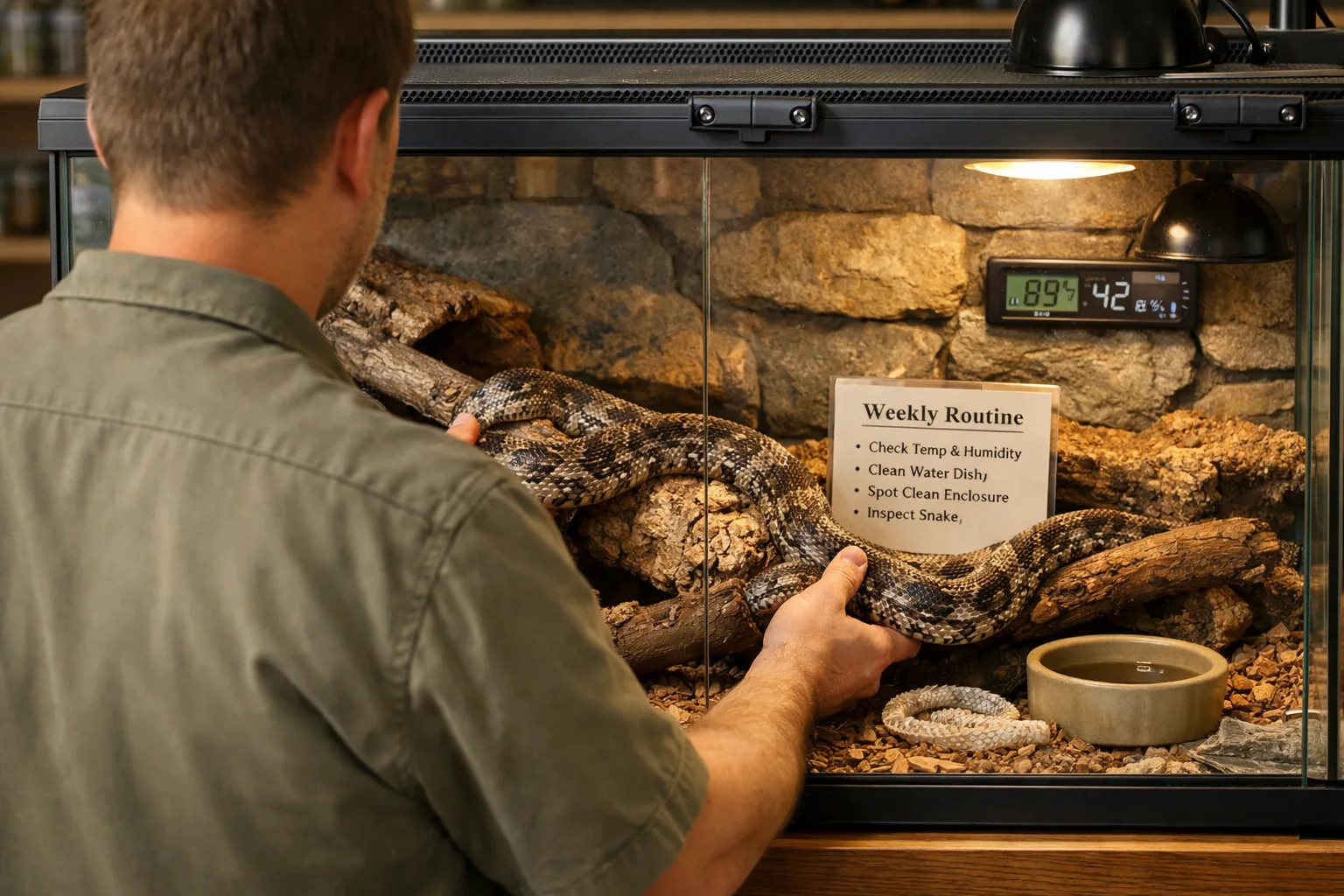
Here’s a basic weekly setup and check routine worth following:
Check both thermometer readings (basking and cool end) once daily.
Refill and clean the water dish every 2-3 days.
Feed on the appropriate schedule (5-7 days juveniles, 7-10 days adults).
Spot-clean substrate for waste as soon as you see it.
Check the humid hide moss weekly, more often if a shed is coming.
Inspect the lid latches monthly for wear.
Do a full substrate change every 4-6 weeks.
Retained shed, especially around the tail tip or eye caps, is the most common health issue keepers run into, and it almost always traces back to humidity that’s either too low during the actual shed window or a missing humid hide. A quick look through a species-specific enclosure guide, like the ones on petterrarium.com, can help if you’re building your first setup and want to compare notes on hide placement and branch layout before you commit to a final design.
Frequently Asked Questions
Do Texas rat snakes need a humidifier or fogger?
No. Standard room humidity in most homes (30-50%) is usually fine for a Texas rat snake, and a fogger or humidifier will likely push the tank too wet for this dry-climate subspecies.
How big of an enclosure does an adult Texas rat snake actually need?
Plan for at least 40 gallons or a 4-foot by 2-foot footprint, with 18-24 inches of height for climbing. Anything smaller works short-term for juveniles but limits growth and activity in a full-grown adult.
Are Texas rat snakes good for first-time snake owners?
They’re a reasonable choice for someone with some handling confidence already, but they’re more active and can be nippier as juveniles than a corn snake. Most calm down noticeably by 1-2 years old with regular, gentle handling.