Your western hognose will not bite you like a rattlesnake, and it will probably refuse food at least once for no reason you can figure out. Both of those facts surprise new owners more than anything else about this species. Get past them, and you’ve got one of the most personality-packed, beginner-friendly snakes in the hobby.
People search for western hognose care because they saw one flip over and play dead on video, or puff up like a tiny cobra, and now they want one. Fair enough — they’re worth it. But the setup and the feeding quirks trip people up more than the internet lets on, so let’s get into what actually matters.
Enclosure Setup: Size, Substrate, and Digging Room
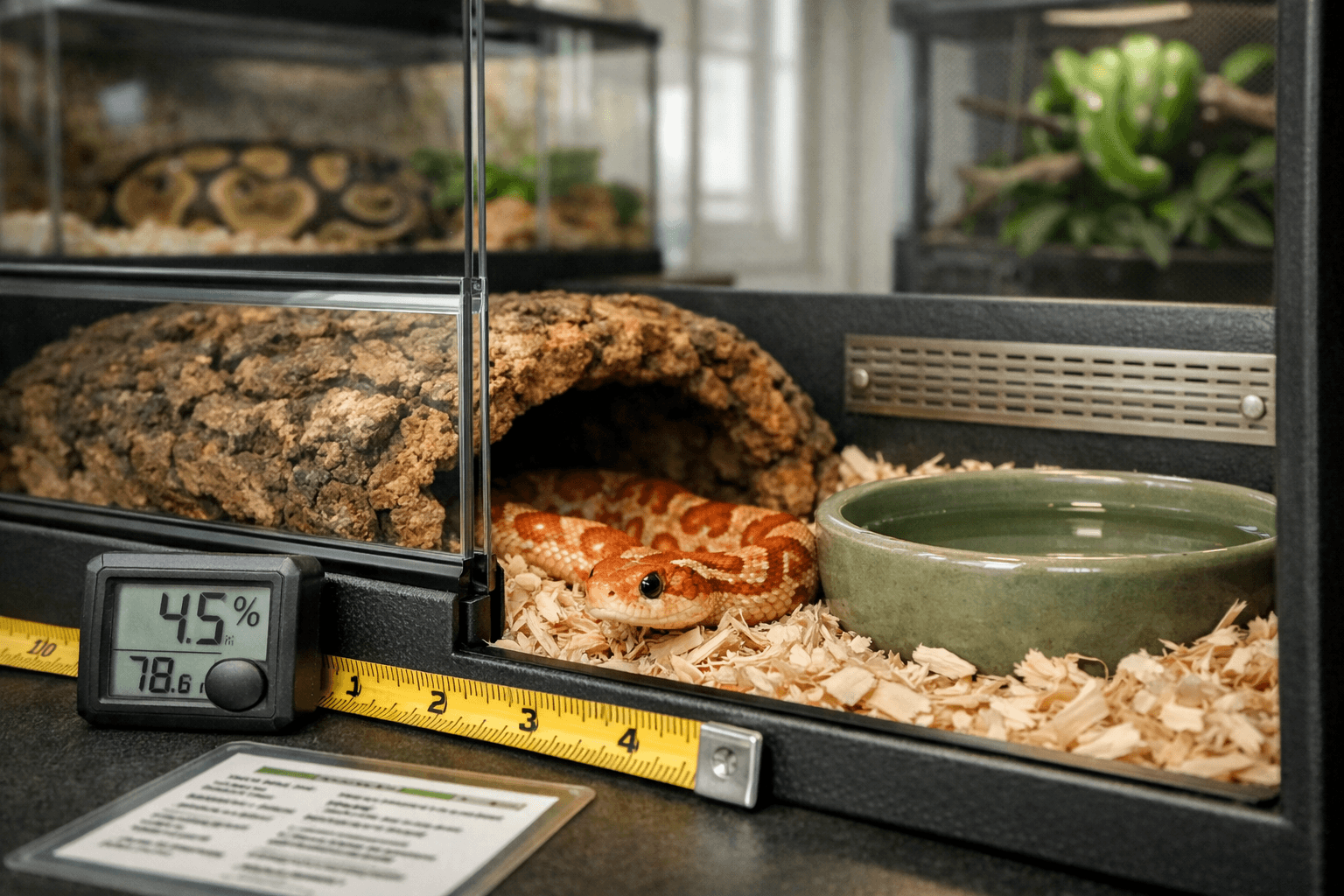
A single adult western hognose does fine in a 20-gallon long tank, though a 30-gallon or a 36x18x18 PVC enclosure gives you more room to build a real gradient. Hatchlings should start smaller, in something like a 10-gallon or plastic tub setup, so they don’t feel exposed and stress out over finding food.
Substrate Depth Matters More Than People Think
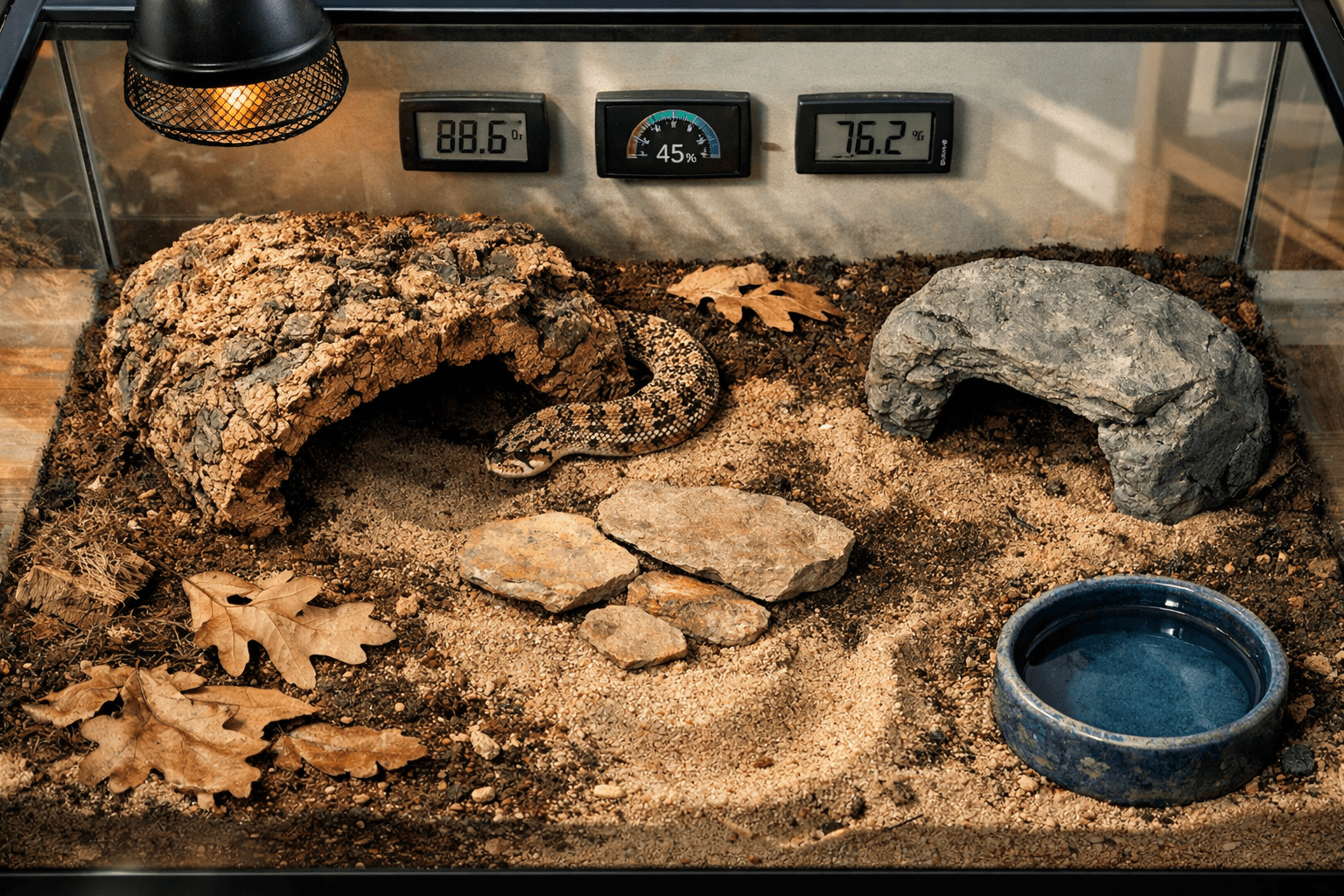
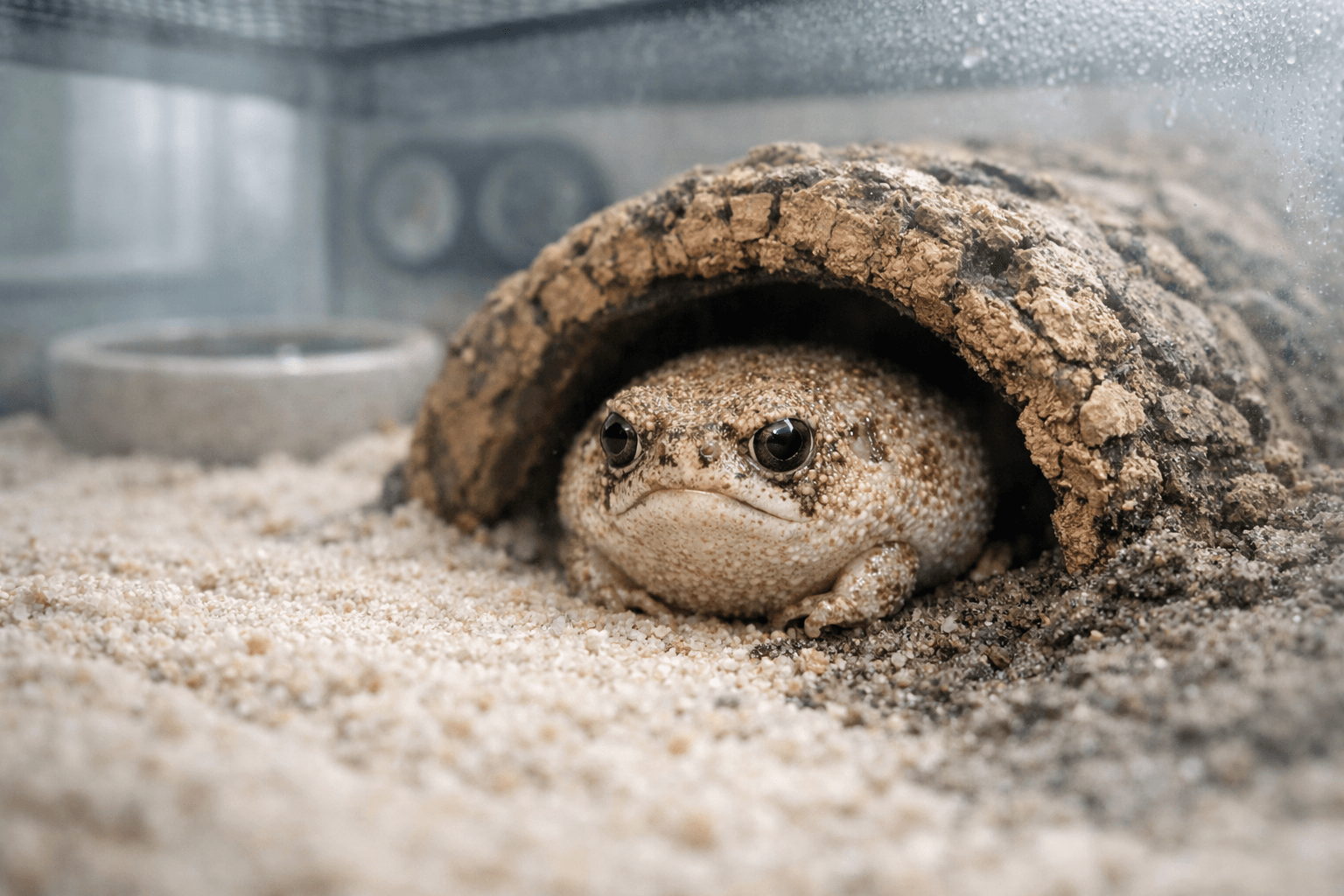
These snakes are diggers by nature. In the wild, they bury themselves in sandy soil to escape heat and predators, so a substrate depth under 3 inches basically wastes their favorite behavior. I’d go with 4 to 6 inches of a mix like reptile-safe play sand blended with topsoil, or a commercial burrowing substrate. This is the single most skipped detail in generic snake care guides, and it’s the difference between a hognose that just sits on top of its substrate and one that actually acts like a hognose.
Furniture and Hides
Add at least two hides — one on the warm side, one on the cool side — plus a water dish big enough to soak in. Cork bark rounds, flat rocks, and a little dry leaf litter give the tank a natural look and extra hiding texture. If you’re building this out for the first time, petterrarium.com has enclosure layout walkthroughs that make the planning part a lot less overwhelming.
Heat, Humidity, and Light: Getting the Gradient Right
Western hognoses need a warm side around 88-92°F and a cool side in the mid-70s, with an ambient drop into the low 70s at night. Skip the tropical humidity setups entirely — this is a semi-arid species, not a rainforest one, and running humidity too high invites skin and respiratory issues fast.
Keep humidity around 30-50%, spiking briefly during shedding by misting one side of the tank. A lot of new keepers borrow habits from ball python or tropical frog care and soak the substrate too much. That’s backwards for a hognose. Dry, with a humid hide available, is the right formula.
UVB isn’t strictly required for survival, but low-level UVB (around 2-5%) is worth running anyway. It supports natural vitamin D synthesis and seems to correlate with better activity and appetite in a lot of keepers’ experience. A basking bulb paired with an under-tank heater on a thermostat handles the temperature side reliably.
Feeding: Why Patience Beats Panic
Western hognoses are notorious picky eaters, and a feeding strike lasting weeks or even a couple of months is not automatically a medical emergency. This is the part most setup guides gloss over completely, and it’s honestly the real skill in keeping this species.
What They Actually Prefer to Eat
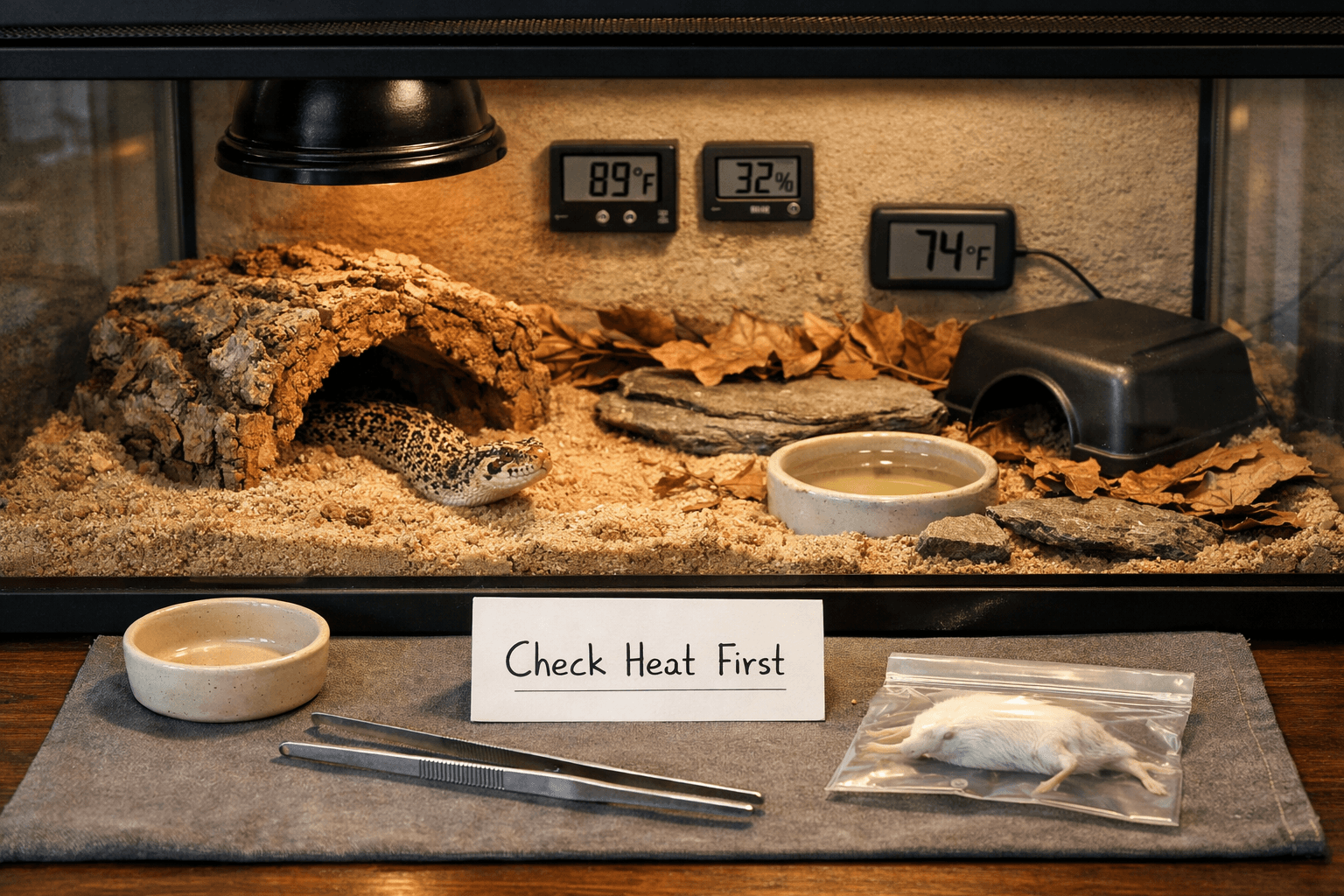
In the wild, hognoses eat a lot of toads, frogs, and reptile eggs, not just rodents. That natural preference is why some individuals turn their nose up at a plain frozen-thawed mouse. Scenting the prey item with canned tuna water, a chicken egg wash, or rubbing it against a shed toad skin (if you can source one) often flips a stubborn eater. Feeder mice or small rats every 7-10 days works for most adults once they’re established feeders.
A Realistic Feeding Troubleshooting Order
Confirm temperatures are correct — a cool tank kills appetite before anything else does.
Try feeding at night, since hognoses are more active in low light.
Switch prey type or size, going smaller than you’d expect.
Scent the prey with tuna juice, egg, or a live-adjacent smell.
Try leaving the prey in the enclosure overnight instead of dangling it.
Give it a full week of rest before trying again.
If it’s been over 8-10 weeks with visible weight loss, then call a reptile vet.
Most feeding strikes resolve on their own with steps 1 through 5. Rushing to a vet at week two usually just stresses the snake more and costs money for a checkup that finds nothing wrong.
Handling, Venom Myths, and Health Watch-Outs
Western hognoses are mild-mannered and handle well once settled, typically tolerating 10-15 minutes a few times a week without stress. Their defensive display — flattening the neck like a cobra, hissing, sometimes playing dead — looks dramatic but is almost entirely bluff.
Here’s the myth to kill for good: a western hognose is not dangerously venomous. They have an enlarged rear tooth and mild toxin from the Duvernoy’s gland, used to subdue small prey like toads. It’s rear-fanged delivery, not a hollow-fang injection system like a viper’s. A bite from a hognose might cause minor local swelling in some people, similar to a bee sting reaction, but it is not a medical emergency for a healthy adult.
Health-wise, watch for retained shed around the eye caps and tail tip, which is common if humidity runs too low during a shed cycle. Keep an eye on stool consistency and basking behavior as your early warning signs, rather than assuming every skipped meal means illness.
Morphs, Sourcing, and Real Setup Costs
Western hognoses come in a wide range of morphs now — anaconda, albino, arctic, and super arctic combos are common in the trade, with prices ranging from around $150 for normal-colored animals up to $600 or more for rarer combo morphs. Buy from a breeder who can show you a feeding history, since a snake with a documented feeding record saves you the guesswork described above.
Setup Item
Budget Option
Better Long-Term Option
Enclosure
$60 (20-gal used tank)
$200 (PVC front-opening enclosure)
Heating (UTH + thermostat)
$35
$70
Substrate (initial + refills)
$25
$50
Hides and decor
$20
$60
UVB fixture
$30
$50
Snake itself
$150 (normal morph)
$400 (designer morph)
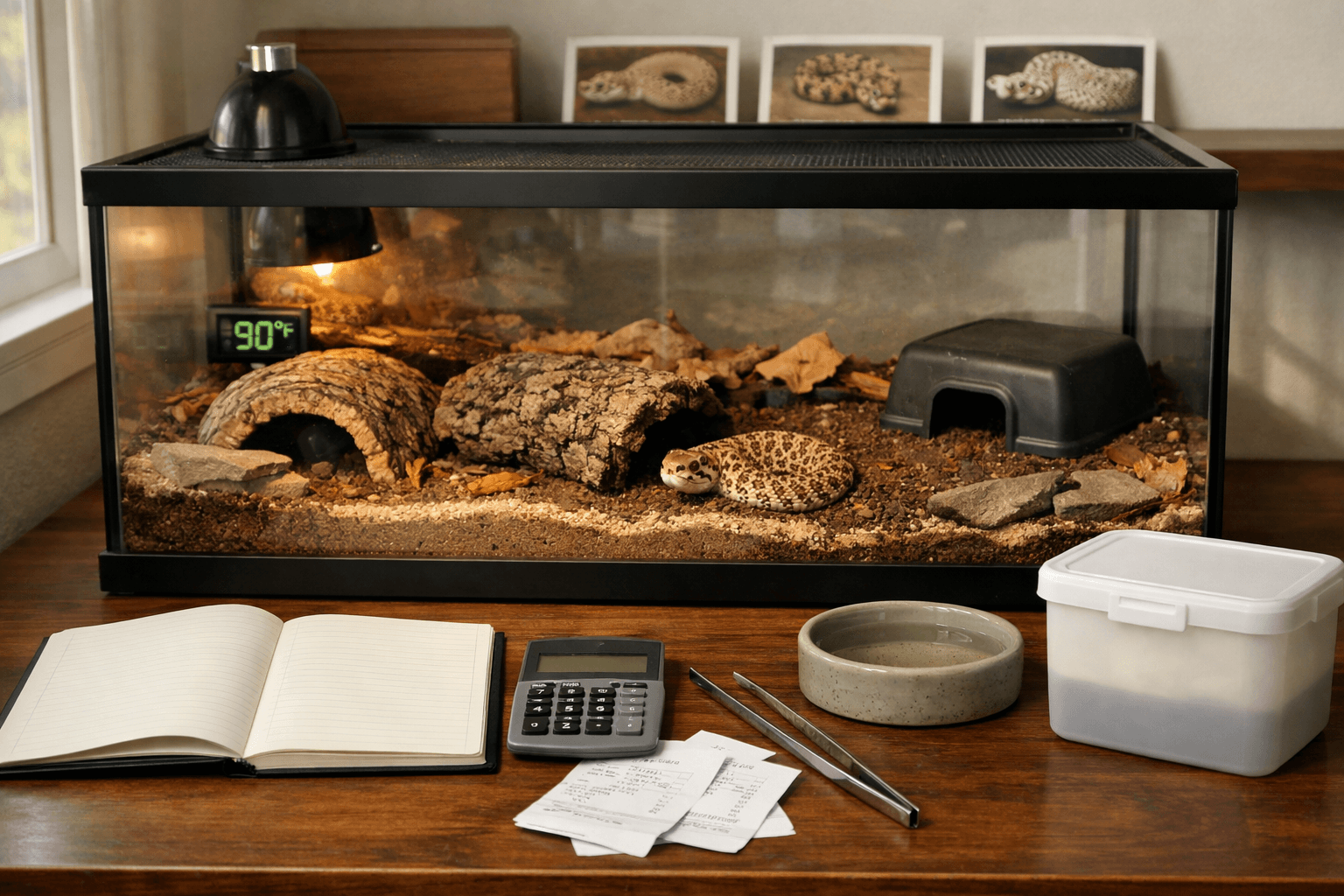
A full budget setup runs around $320 total, while a nicer long-term build with a fancier morph lands closer to $830. Either way, ongoing costs stay low — feeder rodents run maybe $10-15 a month, making this one of the more affordable reptiles to keep long-term once the tank is built.
Frequently Asked Questions
Is a western hognose snake safe to own as a first pet?
Yes. They’re mild-mannered, small (rarely over 3 feet), and their mild rear-fanged venom isn’t a danger to healthy adults, though people with allergies should still handle with a bit of caution.
Why won’t my western hognose eat?
Feeding strikes lasting weeks are common and rarely medical — check tank temperature first, then try scenting prey with tuna juice or egg wash before assuming something’s wrong.
How big of a tank does an adult western hognose need?
A 20-gallon long tank works for most adults, though 30 gallons or larger gives better room for a heat gradient and the 4-6 inches of substrate they need for digging.