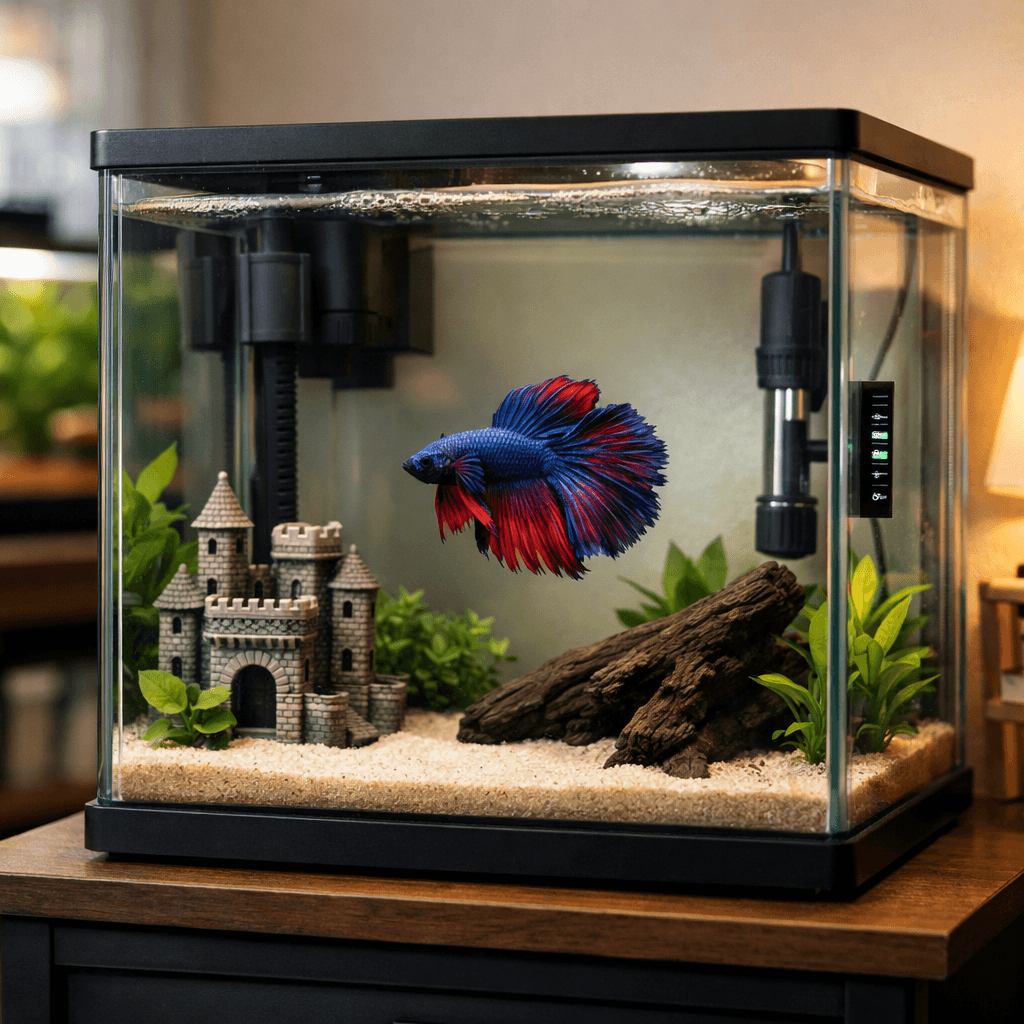
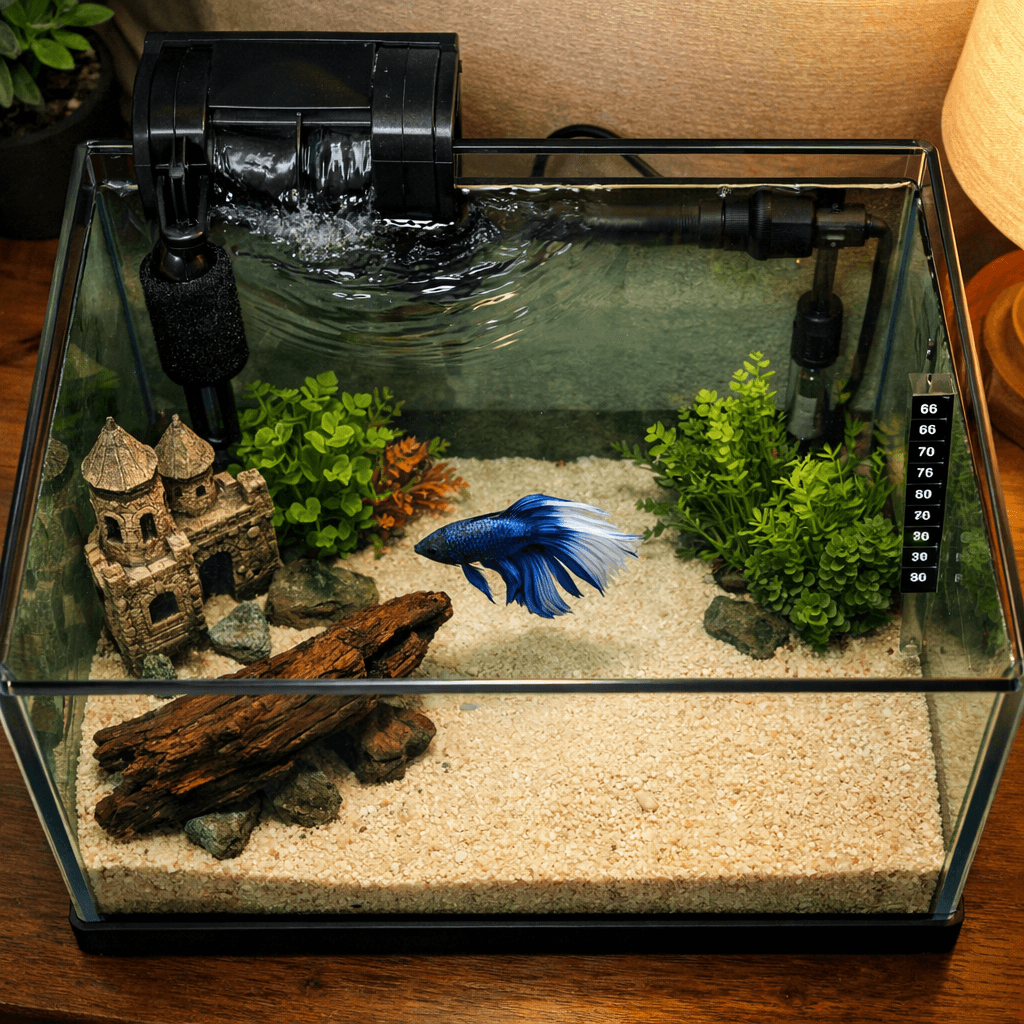
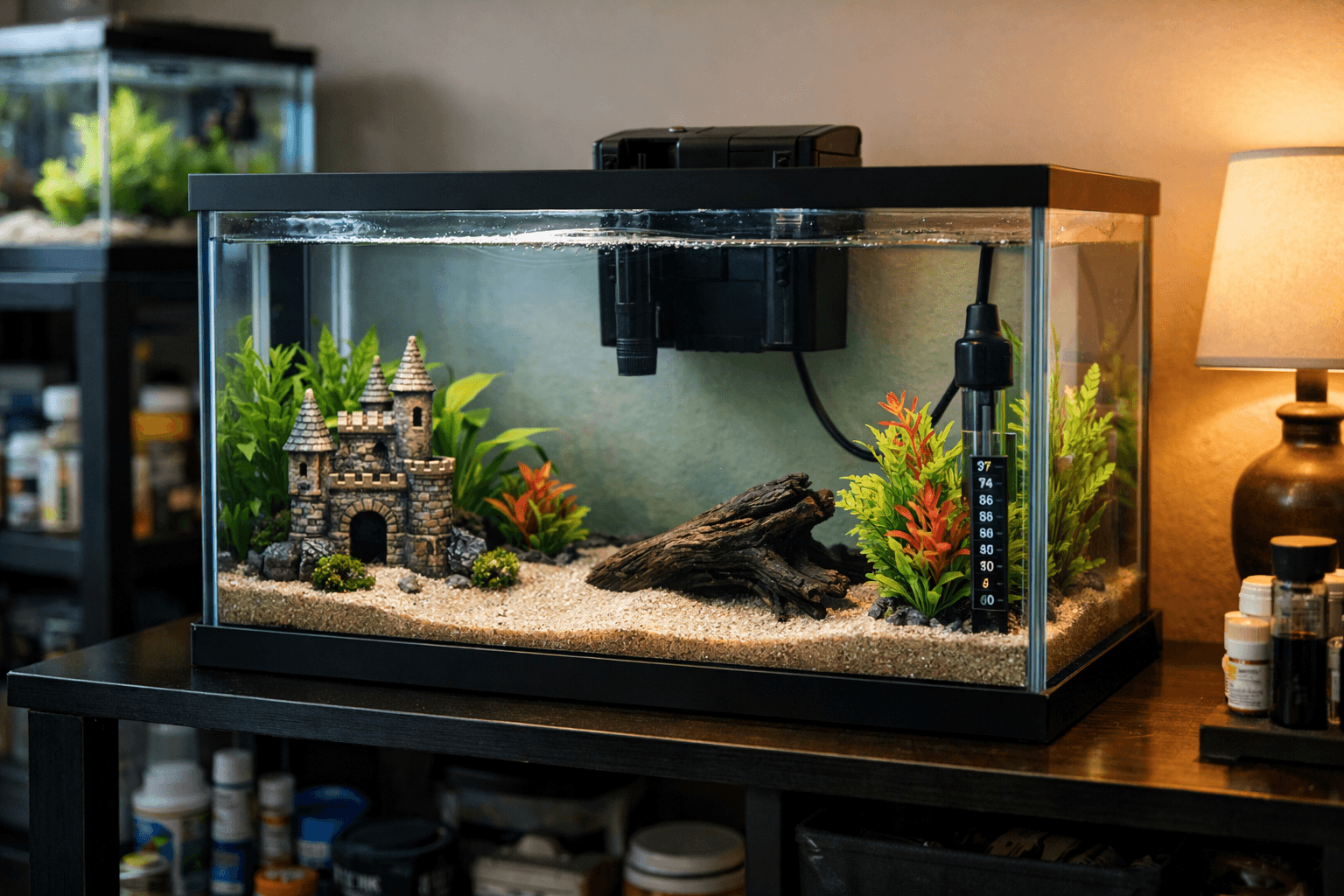
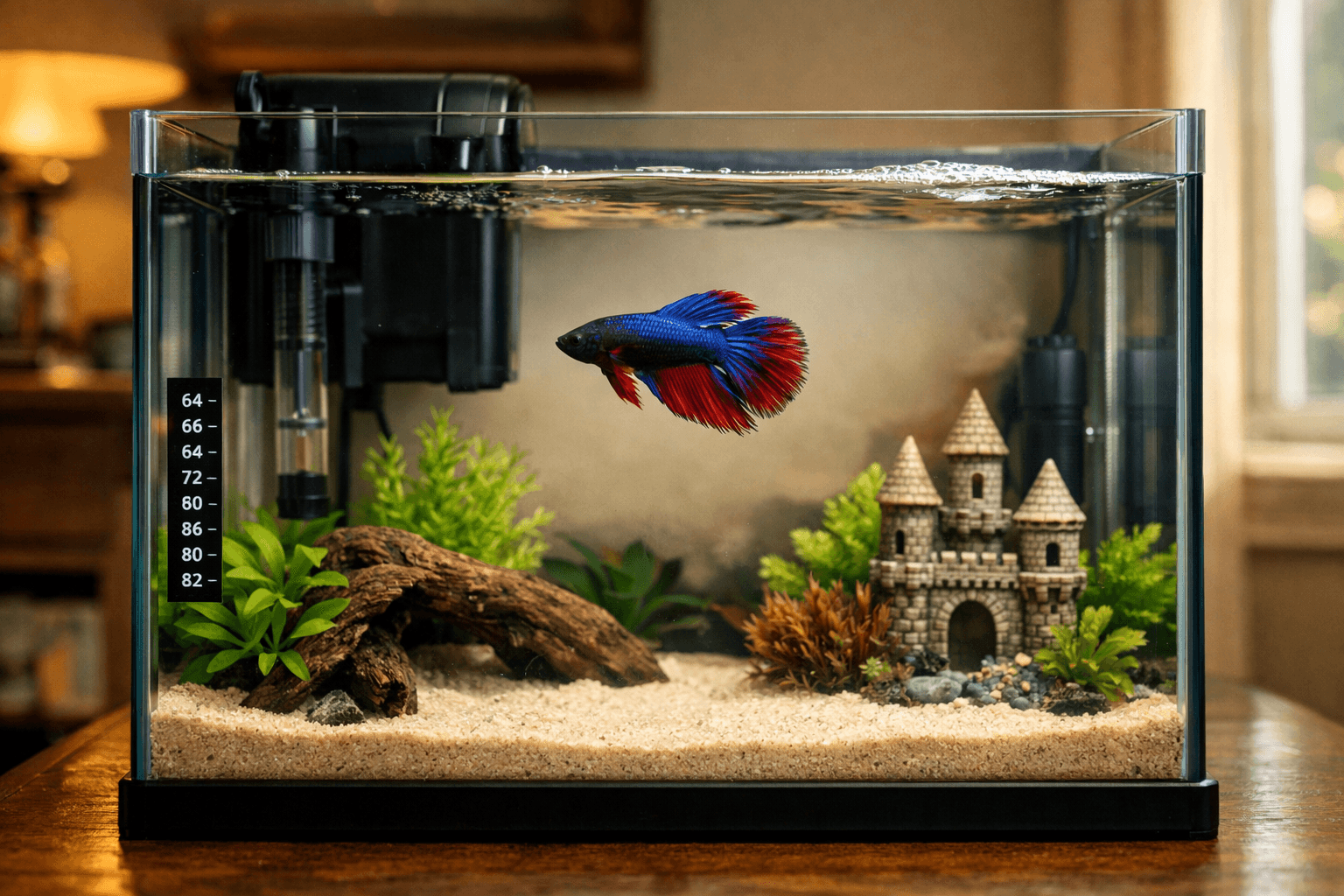
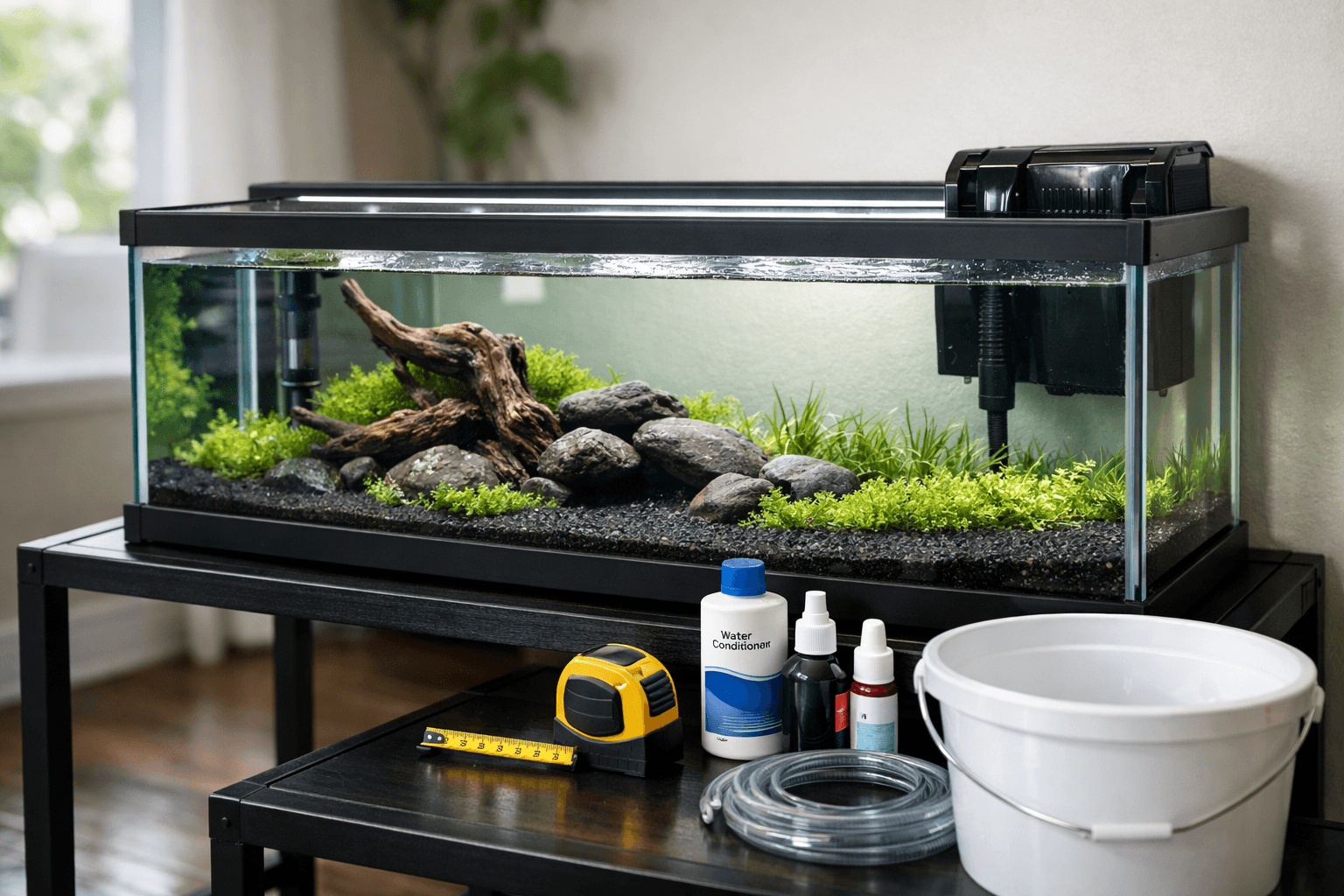
A guy in my local fish group posted a photo last spring of his betta tank: a 5 gallon cube so packed with driftwood, fake castles, and a giant filter box that the poor fish had about six inches of open water to swim in. He asked why his betta looked stressed and stopped building bubble nests. The tank wasn’t too small — it was just poorly planned. That’s the real lesson behind every 5 gallon tank betta setup: five gallons is plenty of room, but only if you design around the equipment instead of just dumping gear in and hoping for the best.
If you’re coming from reptile or terrarium keeping, this will feel familiar. You already know how to think about footprint versus usable space in a vivarium. Betta tanks need that same mindset, just underwater.
Is 5 Gallons Actually Enough Space for a Betta?
Yes, 5 gallons is enough space for one betta, and it’s honestly the sweet spot for most first-time keepers. It’s big enough to hold stable water parameters but still small enough to clean and heat without a huge budget.
The old idea that bettas do fine in bowls or cups comes from how they’re sold in stores and how they survive in shallow rice paddies and roadside ditches in Southeast Asia. Survive is the key word there. Betta splendens can gasp air at the surface and tolerate low-oxygen puddles for a while, but that’s a stress response, not a thriving condition. A tank under 5 gallons swings in temperature and ammonia way too fast for comfort.
Here’s the part most guides skip: five gallons isn’t a magic number, it’s a minimum working space once you subtract equipment. A heater takes up a few inches. A filter, even a small one, takes up more. Decor eats the rest. If you don’t plan for that upfront, your betta ends up in a tank that’s technically 5 gallons but functionally more like 2.5 gallons of usable swimming room.
Compare that to going smaller. A 2.5 gallon tank heats and cools fast, which stresses the fish and makes dosing conditioner or medication harder to get right. A 5 gallon gives you breathing room for mistakes, which matters a lot when you’re new to this hobby.
Going bigger, like a 10 gallon, isn’t wrong either. It’s just more tank to fill, more water to heat, and more real estate for live plants if that’s your goal. For most apartment setups and first bettas, though, 5 gallons hits the balance between manageable and actually spacious.
Why “Minimum” Doesn’t Mean “Bare”
A 5 gallon minimum assumes you’re going to decorate it well, not leave it empty to save money. An empty 5 gallon tank with just a heater and a bare bottom is actually harder on a betta than a planted one, because there’s nowhere to rest or feel secure.
The Footprint Math Nobody Talks About
Add up your heater, filter, and one piece of decor, and you’ll often lose 20-30% of your usable volume. Planning that space instead of discovering it later is the whole point of this design approach.
Choosing a Heater: Wattage, Placement, and Temperature Stability
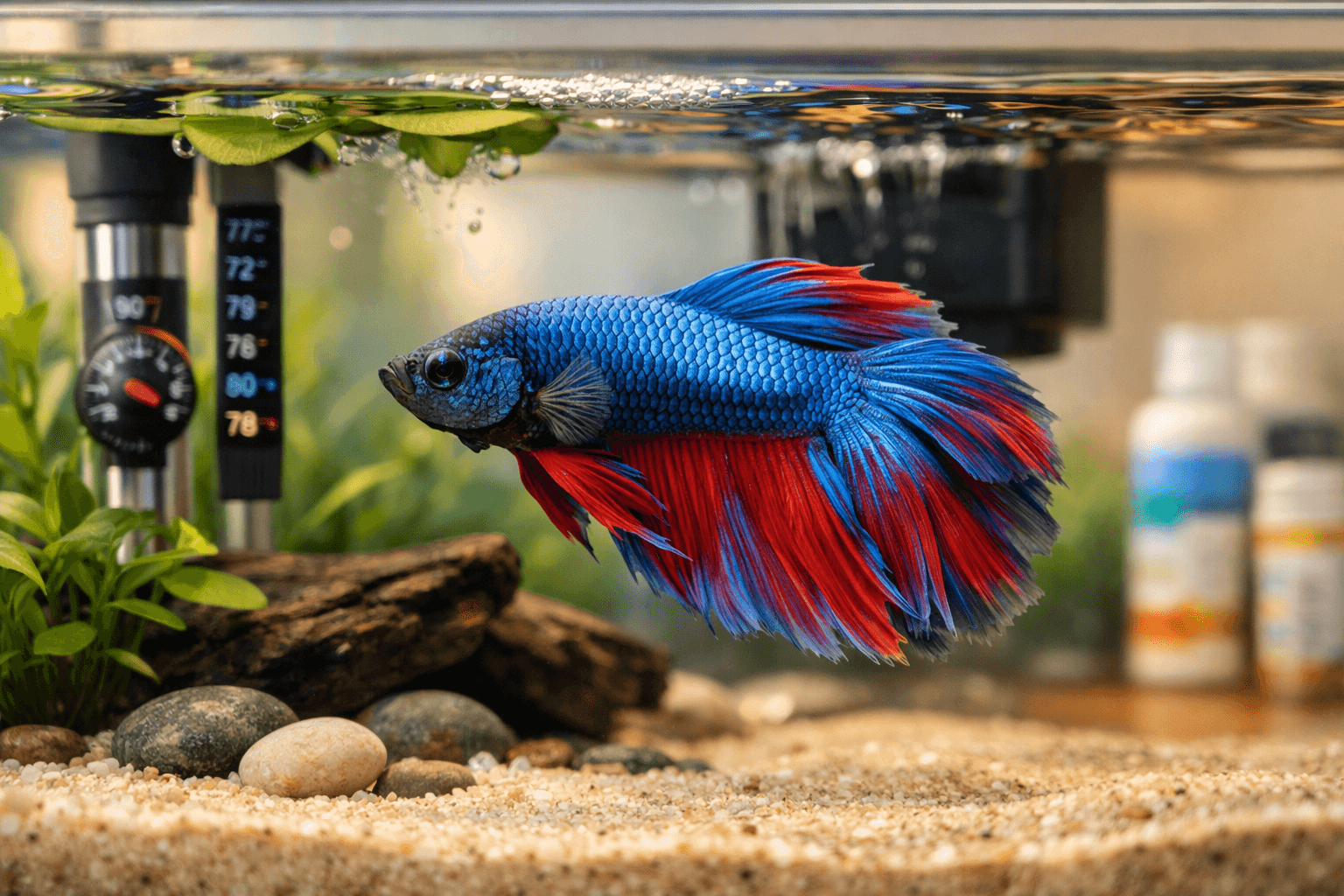
For a 5 gallon tank betta setup, a 25-watt adjustable heater is the standard choice, and it should hold your water between 76-82°F. Bettas are tropical fish, and cold water slows their metabolism and immune system fast.
Don’t go by wattage alone. A cheap non-adjustable heater set for a generic “tropical” range can overheat a tank this small, since there’s so little water to buffer temperature swings. Look for one with a visible dial or digital control, and pair it with a separate stick-on or floating thermometer so you’re not trusting the heater’s built-in guess.
Placement matters more than people expect. Horizontal heaters near the bottom heat more evenly than vertical ones near the surface. In a 5 gallon, I’d mount it along the back wall, low but not touching the substrate, so heat rises through the whole column instead of pooling near the top where your betta actually swims.
Here’s a real trade-off: heaters take up physical space, and in a small tank that matters. A slim 25-watt unit tucked in a back corner barely disrupts the swimming area, but a bulky older-style heater can eat up a surprising chunk of a 5 gallon footprint. When you’re shopping, thinner designs are worth the few extra dollars.
Temperature swings are the actual danger, not any specific number in that 76-82°F range. A tank that bounces from 74 to 84 over a day will stress a betta way more than one that sits steady at 78. That’s why an unheated “room temperature” tank is a mistake even in warm climates — rooms swing more than people think, especially at night.
Check your heater with a manual thermometer for the first week daily. After that, twice a week is usually enough once you know it’s holding steady. If you ever see fin clamping, lethargy, or a betta hanging near the surface gasping, temperature is one of the first things to check.
One more thing worth saying clearly: a betta in an unheated tank is not thriving, no matter how “hardy” people claim the species is. Give it a heater. It’s a small cost against a much better outcome.
Filtration: Getting Flow Without Shredding Fins
The right filter for a 5 gallon tank betta setup is a small sponge filter or a low-flow internal filter, ideally rated around 20-40 gallons per hour, with the output baffled so it doesn’t blast the tank. Betta fins are long and delicate, and strong unbaffled flow will exhaust a fish fast.
Sponge Filters vs. Hang-On-Back Filters
A sponge filter, run off a small air pump, gives you gentle, steady flow and a ton of surface area for beneficial bacteria. It’s quiet, cheap, and forgiving if you forget to clean it for a week. The downside is it’s less visually clean-looking than a hang-on-back unit, and it takes up interior tank space instead of hanging outside.
A hang-on-back (HOB) filter, like the smallest models from brands such as Aqueon or Tetra, keeps more of the mechanical parts outside the tank, which helps with that footprint problem I mentioned earlier. But most HOB filters made for a 5-10 gallon range run stronger than a betta wants straight out of the box.
Baffling: The Fix Nobody Mentions on the Box
Baffling means slowing the output flow so it doesn’t create a current strong enough to push your betta around. You can do this with a piece of filter floss, a plastic baffle attachment, or even a simple trick like directing the output against the tank wall so it diffuses before reaching open water.
Skipping this step is one of the most common mistakes I see. A betta constantly fighting current will show ragged, frayed fin edges within a few weeks, and people often blame fin rot when the real cause is mechanical stress from flow they never adjusted.
Test your flow with a floating leaf or a bit of food. If it shoots across the tank in a second, baffle it more. Your betta should be able to hang out anywhere in the tank, including right near the filter output, without getting pushed around.
Substrate, Live Plants, and Decor That Don’t Eat Your Swimming Room
The best substrate for a 5 gallon betta tank is a thin layer (about 1-1.5 inches) of fine gravel or sand, and the best decor mix is 2-3 pieces of smooth, low-footprint material rather than a pile of bulky ornaments. This is where the terrarium mindset really pays off.
Substrate Options Worth Comparing
Fine gravel is the easiest for beginners since it’s cheap and holds plant roots decently. Sand looks more natural and is gentler on a betta’s belly and fins when it rests on the bottom, which bettas do more than people expect. Bare-bottom tanks are the easiest to keep clean but offer nothing for beneficial bacteria or root-based plants, so I’d skip that route for a first setup.
Substrate Type
Cleaning Effort
Plant Support
Betta-Friendly
Fine gravel
Medium
Good
Yes
Sand
Medium-high
Fair
Excellent
Bare bottom
Low
None
Fair
Large gravel
Low
Poor
Risky (fin snags)
Live Plants vs. Silk Plants
Live plants like Anubias nana, Java fern, and Marimo moss balls are the best combination of low-maintenance and betta-safe, since they don’t need substrate root systems and tolerate lower light. They also help absorb some nitrates between water changes, which is a real bonus in a small tank where waste concentrates fast.
Silk plants are a fine substitute if you don’t want to deal with plant care at all, but avoid plastic plants with hard, stiff leaves. Betta fins are basically tissue paper compared to a plastic leaf edge, and I’ve seen torn fins traced right back to a cheap plastic plant nobody thought twice about.
For decor, pick 2-3 items max in a 5 gallon: one cave or hideout, one piece of driftwood or a plant cluster, and maybe a floating log or leaf hammock near the surface. Betta love resting near the top, and a leaf hammock gives them a spot to do that without straining to swim up constantly.
Cycling the Tank Before Your Betta Ever Goes In
Cycling means growing a colony of beneficial bacteria that converts ammonia into nitrite and then into less harmful nitrate, and it needs to happen before your betta moves in, not after. Skipping this step is the single most common mistake new betta owners make, and it’s the fastest way to injure or kill a fish that would otherwise be fine.
Ammonia comes from fish waste and uneaten food. In an uncycled tank, it builds up fast, and even small amounts burn a betta’s gills and fins. People often blame the fish store for selling them a “sick” betta, when really the ammonia spike from a brand-new uncycled tank is what caused the damage in the first two weeks.
Fishless cycling is the safer route. You add a source of ammonia (some hobbyists use a bottled product, others use a bit of fish food to rot) and test water daily with a liquid test kit until you see ammonia processing into nitrite, and then nitrite processing into nitrate. That full cycle typically takes 4-6 weeks in a 5 gallon tank, though it can run a little faster with a bacteria-starter product and a mature filter sponge borrowed from an established tank.
Here’s a shortcut a lot of keepers don’t realize is available: if you or someone you know already runs an established aquarium, borrowing some filter media or a handful of gravel from that tank can seed your new one with bacteria and cut cycling time down significantly, sometimes to under 2 weeks.
Test your water with an actual liquid test kit, not strips, if you can afford the roughly $25-30 for something like the API Freshwater Master Test Kit. Strips are less accurate right when accuracy matters most.
Set up the tank fully decorated, running the heater and filter, with no fish inside.
Add an ammonia source and dose to roughly 2-4 ppm.
Test daily and track when ammonia starts dropping (bacteria are established).
Watch for nitrite to spike, then drop as a second bacteria colony grows.
Confirm nitrate is present and ammonia/nitrite both read zero for several consecutive days.
Do a partial water change to bring nitrate down before adding your betta.
Add your betta gradually, floating the bag for temperature first.
Once you’ve been through this process, it’s a lot less intimidating the second time, and if you ever branch into a bigger community tank or a different species tank, the same cycling logic applies.
Water Parameters, Lighting, and a Maintenance Routine You’ll Actually Keep
Stable water beats perfect water. For a betta, aim for a pH around 6.5-7.5, ammonia and nitrite at 0 ppm, nitrate under 20 ppm, and lighting on for about 8-10 hours a day on a consistent schedule.
Testing and What the Numbers Actually Mean
Ammonia and nitrite should always read zero once your tank is cycled. If either shows up after the initial cycle, that’s a sign of overfeeding, overstocking, or a filter that’s not running enough beneficial bacteria anymore. Nitrate creeping above 20-40 ppm isn’t an emergency, but it means you’re due for a water change soon.
pH matters less than people think, as long as it’s stable. A betta living happily at 7.4 for months will handle that better than one bounced between 6.8 and 7.6 every week from inconsistent water changes. Consistency is the goal, not chasing a “perfect” number you saw in a forum post.
A Simple Weekly Maintenance Routine
Most 5 gallon betta tanks need a 25-30% water change once a week, plus a quick gravel vacuum to pull out waste that settles between plants and decor. Skipping water changes because “the tank looks clean” is a trap — clear water can still carry high nitrate.
Lighting doesn’t need to be complicated. A basic LED hood or a simple clip light on a timer for 8-10 hours a day is enough for low-light plants like Anubias and gives your betta a normal day-night rhythm. Leaving lights on 24/7 stresses fish and encourages algae, so a cheap timer (often under $15) is worth the money.
Watch behavior as your real feedback system. A betta that’s building bubble nests, swimming with fins flared and relaxed, and eating within a minute or two of food hitting the water is doing well. Clamped fins, faded color, or hiding constantly are signs something in the water or the setup needs a second look, and it’s almost always temperature, ammonia, or aggressive tank mates behind it.
Tank Mates: What Actually Works in a 5 Gallon
The honest answer is that a 5 gallon tank betta setup works best as a solo betta tank. There isn’t much room to safely add tank mates once you factor in the swimming space equipment already takes up, and bettas are territorial enough that crowding backfires more often than it works.
Nerite snails are one of the few additions that genuinely work in a 5 gallon, since they clean algae and don’t compete for swimming space or food in a way that stresses the betta. A single nerite snail adds cleanup value without meaningfully shrinking usable tank volume.
Small shrimp, like Neocaridina, are a more mixed bag. Some bettas ignore them completely; others treat them as snacks. In a tank this size there’s nowhere for shrimp to hide long-term if your betta decides to hunt, so I’d only try this if you’re fine potentially losing a shrimp or two.
What doesn’t work: schooling fish like neon tetras or any nippy species in a 5 gallon. People see these combos work in 10-20 gallon tanks and assume they’ll scale down fine, but the math doesn’t hold. There’s not enough space to break line of sight or give a nervous fish somewhere to retreat, and fin-nipping species will absolutely go after a betta’s long tail given the chance.
If you really want a community feel, that’s a job for a 10-gallon-plus setup with more swimming room and more hiding spots, not a squeeze into 5 gallons. Save the multi-species dream tank for when you upgrade, and let this one just be a great solo home. Readers who want to plan that bigger build later can find broader aquarium layout guides on sites like petterrarium.com once they’re ready to expand beyond a single-betta setup.
Frequently Asked Questions
Can a betta live in a 5 gallon tank without a filter?
Not comfortably long-term. A filter cycles waste and keeps ammonia from building up between water changes, and without one you’d need daily partial changes just to keep the water safe.
How often should I feed a betta in a 5 gallon tank?
Feed once or twice a day, offering only what your betta eats in about 2 minutes, roughly 2-4 pellets per feeding. Overfeeding is the main driver of ammonia spikes in small tanks, so err on the side of less.
Do I need an air pump if I already have a filter?
Only if you’re running a sponge filter, which needs an air pump to move water through it. Most small hang-on-back filters don’t need a separate air pump since they have their own motor.
Why does my betta’s fins look ragged even though the water tests fine?
Ragged fins with clean water usually point to flow that’s too strong, sharp decor edges, or aggressive tank mates rather than water quality. Check your filter output first, since unbaffled flow is one of the most overlooked causes.