A guy at my local reptile shop once told me about a customer who bought a hatchling terrapin red eared slider for her son, set it up in a 10-gallon tank with a plastic palm tree, and figured that was that. Fourteen months later she was back, asking why her “small turtle” now had a shell as long as her hand and was climbing out of the tank at night. That’s not a rare story. It’s basically the default story with this species, and it’s exactly why habitat planning for a terrapin red eared slider needs to start with where your turtle is headed, not just where it is now.
If you’re researching tank setup before buying, or you’re already mid-crisis with cloudy water and a turtle that’s clearly cramped, this guide walks through the real numbers: tank size, filtration, lighting, heat, and the stuff most starter guides gloss over.
How Big Does a Red Eared Slider Really Get?
A red eared slider can reach 7 to 12 inches in shell length, with females typically ending up larger than males. That means the “cute palm-sized turtle” you bring home is going to roughly triple or quadruple in size over its first few years.
Growth happens fast, too. A hatchling around the size of a half-dollar can hit 4-5 inches within the first year alone if it’s eating well and kept warm. By year two or three, most sliders are already approaching adult size, which catches a lot of new owners off guard.
The Tank Size Progression You Should Actually Plan For
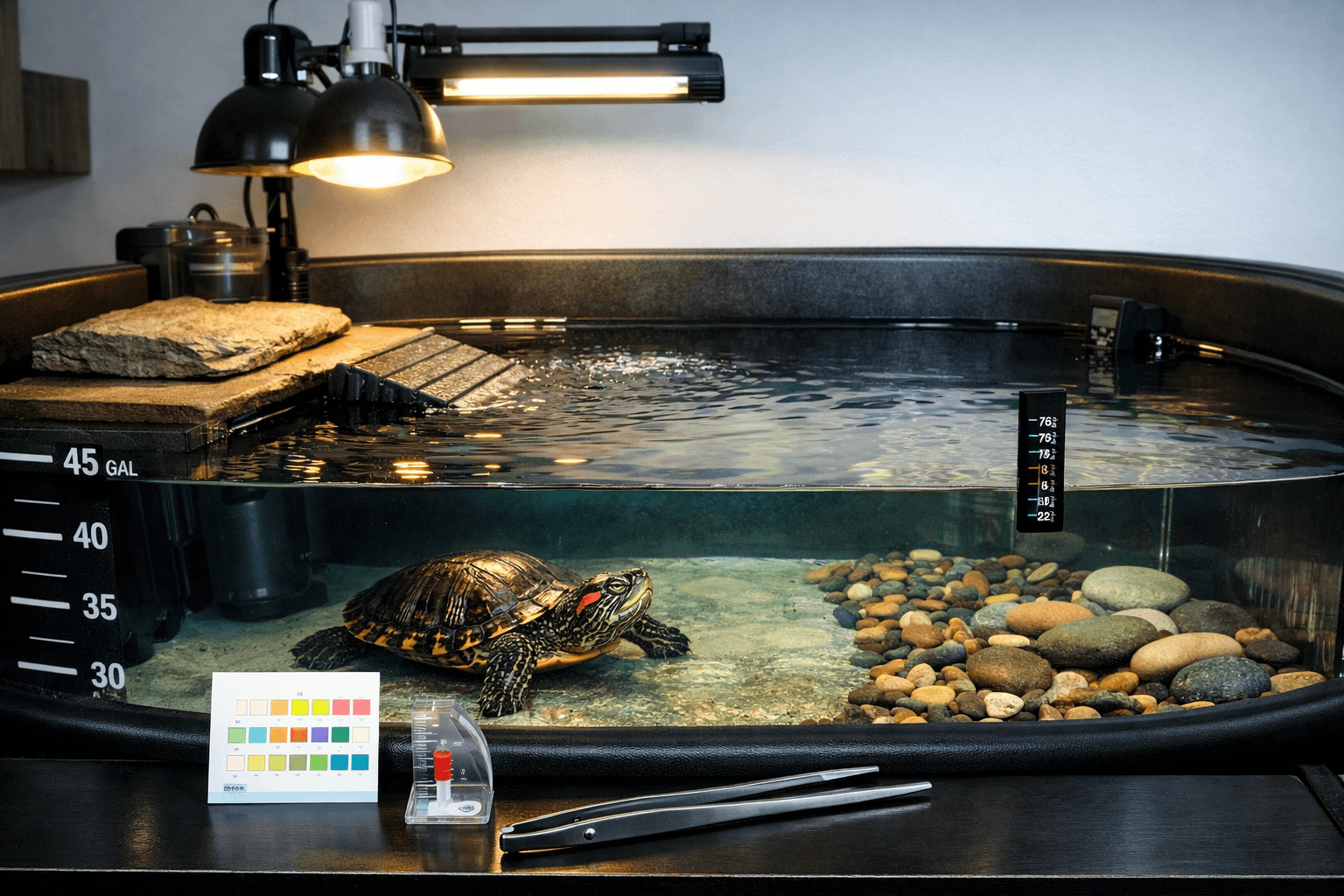
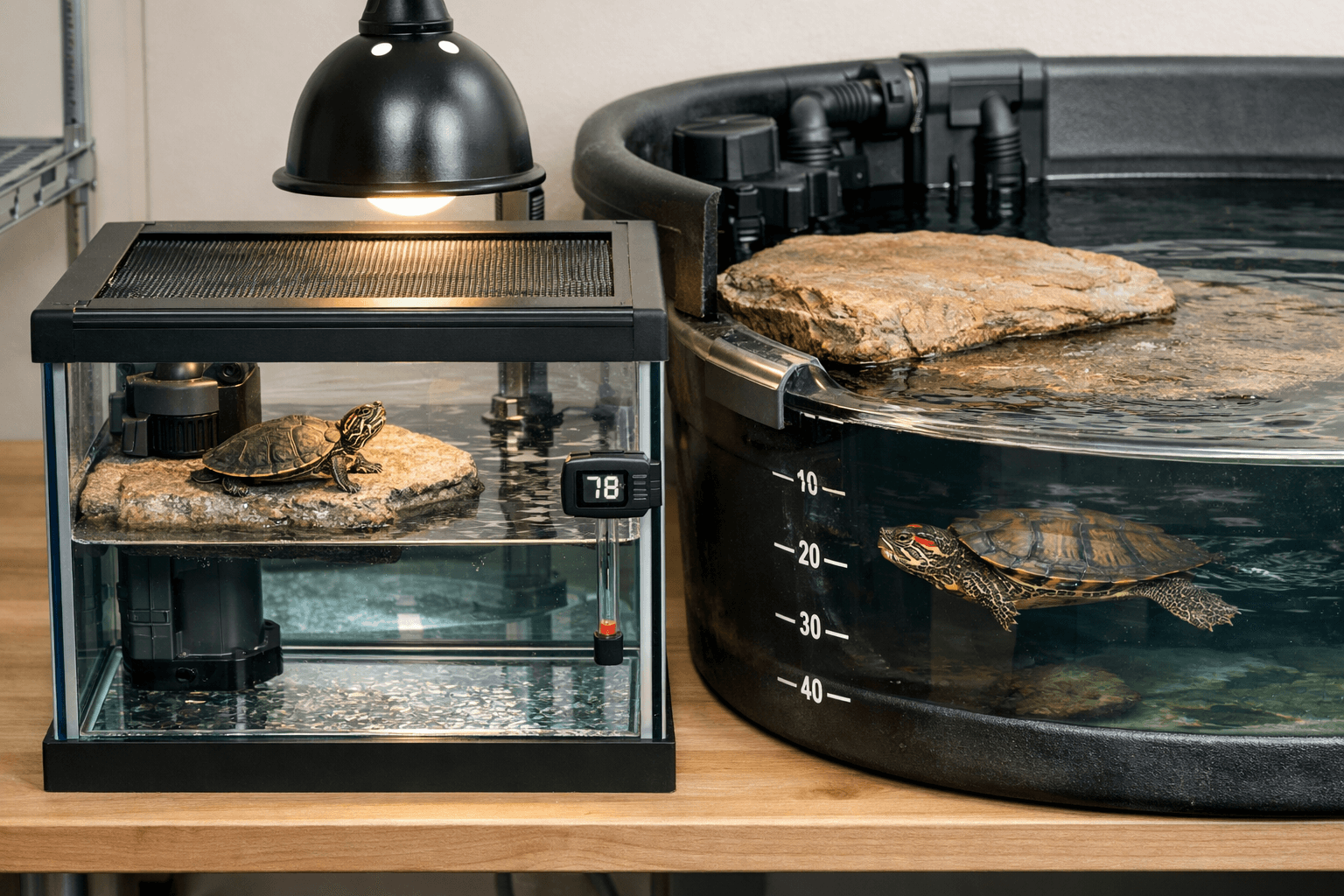
Here’s the rough timeline I’d plan around: a hatchling can start in a 20-gallon long tank, but that’s a temporary home, not a forever one. By 12-18 months, most sliders need 40-55 gallons. By the time they’re full grown, somewhere around 2-3 years old, you’re looking at 75-125 gallons for one adult turtle.
The general rule breeders and vets often cite is 10 gallons of water per inch of shell, and some go even further for sliders since they’re active swimmers that need room to turn around, dive, and bask without bumping into decor constantly.
Why Buying “Big Enough” the First Time Saves Money
Buying a 75-gallon tank right away sounds expensive, and it is, often $150-$300 for a used or basic new setup. But most owners who start small end up buying two or three tanks over three years anyway, which costs more in total and stresses the turtle with repeated moves.
I’d rather see a new owner buy a stock tank or large aquarium up front, even if it looks oversized for a baby turtle. It isn’t. The turtle will grow into it faster than you expect.
Basking Platforms and Dry Docks: The Piece Beginners Skimp On
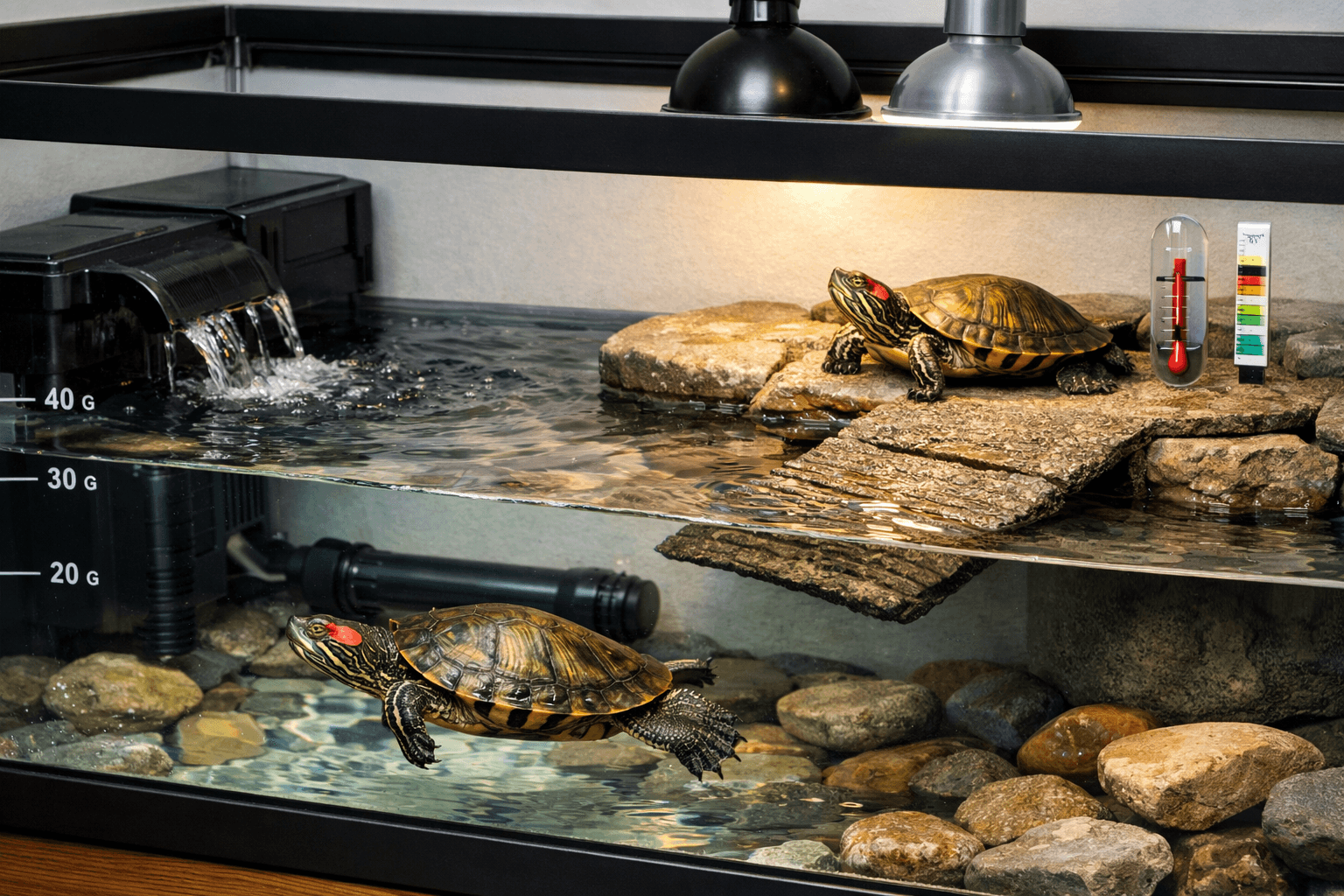
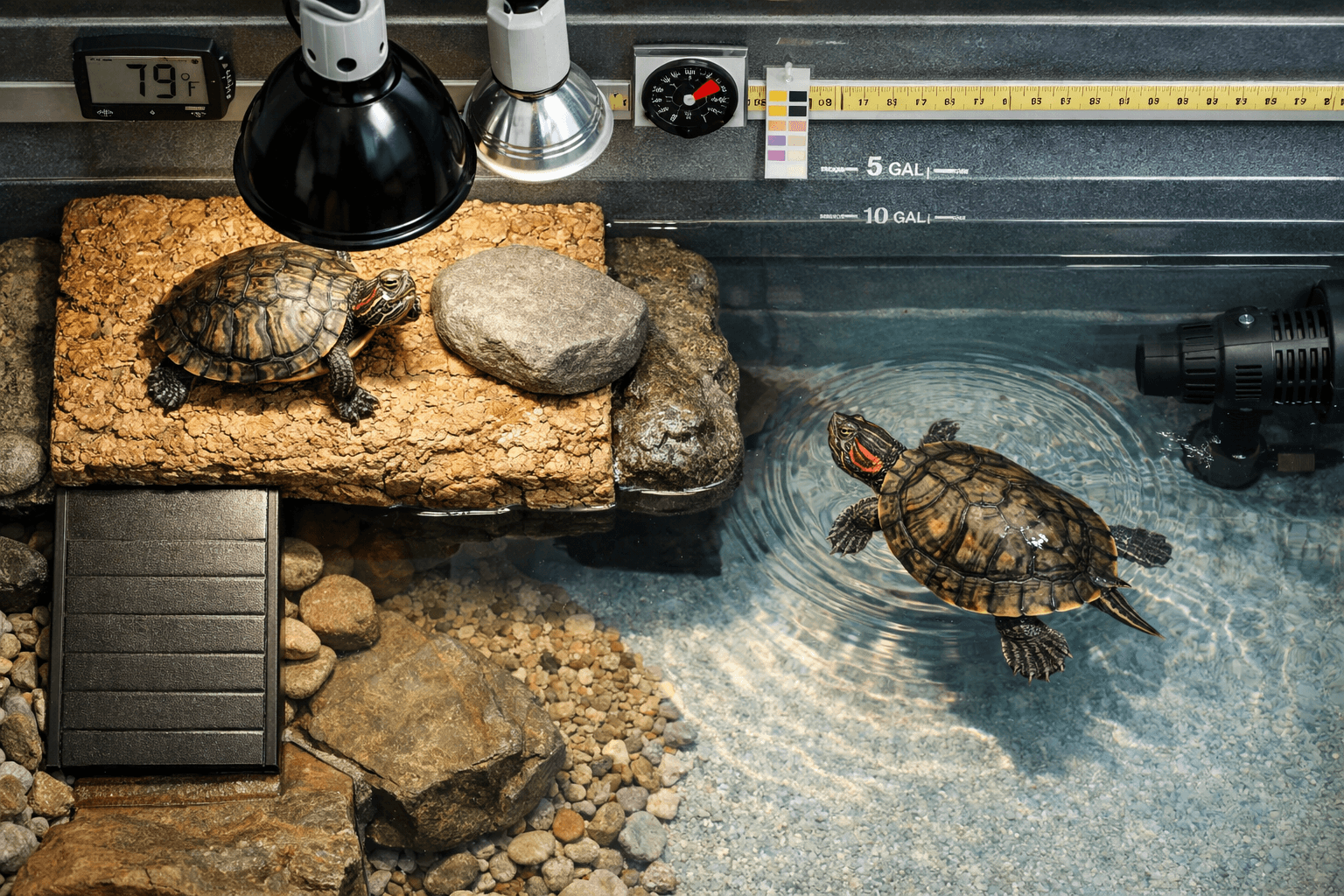
A basking platform is non-negotiable for a terrapin red eared slider, and skipping it or making it too small is one of the fastest ways to cause shell and health problems. Your turtle needs a spot that’s completely out of the water, big enough to fully stretch out on, and stable enough that it won’t tip.
Sliders bask for hours a day. It’s how they regulate body temperature and how their shell dries out between swims, which matters more than people realize.
Sizing and Placement
The platform should be large enough for the turtle’s full body plus a little extra room, roughly one and a half times the turtle’s shell length. For an adult slider that might mean a dock that’s 14-16 inches across, not the tiny plastic ramp that comes bundled in some starter kits.
Position matters too. Put the basking spot at one end of the tank, away from the water heater, and make sure the ramp up to it isn’t too steep for a turtle with short legs to climb.
DIY Versus Store-Bought Docks
Store-bought floating docks work fine for smaller turtles, usually running $15-$40 depending on size and brand. For bigger adults, a lot of hobbyists build platforms out of eggcrate light diffuser panels layered and zip-tied together, then propped against the tank wall. It’s cheap, it’s sturdy, and it’s easy to resize as your turtle grows.
Either way works. What doesn’t work is a floating log too small to hold the turtle’s weight, or a rock pile that leaves sharp edges the shell can scrape against.
UVB Lighting and Heat: The Setup That Prevents Metabolic Bone Disease
Skipping UVB lighting is one of the most common and most damaging mistakes slider owners make, and it directly causes metabolic bone disease over time. UVB lets your turtle’s skin produce vitamin D3, which it needs to actually use the calcium in its diet. Without it, the shell and bones slowly weaken, even if the turtle is eating a great diet.
You need a UVB bulb rated for reptiles, positioned over the basking area, roughly 10-12 inches above the platform depending on the bulb’s strength and the manufacturer’s guidance. A 5.0 or 10.0 UVB tube bulb is standard for turtles, and it should run on a timer for about 10-12 hours a day.
Basking Heat Needs Its Own Bulb
UVB and heat are two different jobs, even though people often assume one bulb does both. You want a separate basking bulb (a standard incandescent or halogen heat bulb works) aimed at the dock to create a basking spot around 90-95°F for juveniles, slightly cooler for adults, around 85-90°F.
Use a digital thermometer to actually check the temperature at turtle level on the platform, not just guess based on bulb wattage. Guessing is how you end up cooking a turtle’s shell or leaving the spot too cool to be useful.
Bulb Replacement Schedule Nobody Tells You About
UVB output drops off long before the bulb actually burns out or stops producing visible light. Most reptile-rated UVB tubes need replacing every 6-12 months even if they still look fine, because the invisible UVB output has already faded. Skipping this replacement schedule quietly recreates the exact deficiency you thought you’d solved.
Filtration: The Real Cost Center Most Guides Downplay
Filtration is where most red eared slider setups fail, because sliders produce an enormous bioload for their size, they’re messy eaters, and they poop directly in the water they swim in. A filter rated for a tank half the size of yours simply won’t keep up, no matter how good the brand is.
The standard advice is to buy a canister filter rated for at least double your tank’s actual volume. So for a 75-gallon adult setup, you’d want a filter rated for 150 gallons or more. That’s not overkill, that’s the minimum to keep water from turning into pea soup within a week.
Filter Types Compared
Filter Type
Best For
Approx. Cost
Maintenance Effort
Hang-on-back (HOB)
Small/juvenile tanks under 40 gal
$30-$70
Weekly cleaning
Canister filter
Adult tanks 55-125+ gal
$100-$250
Monthly deep clean
Sump system
Large custom setups, multi-turtle
$200-$400+
Monthly, more setup work
A canister filter is the sweet spot for most single-adult-slider setups. It’s rated for a 75-gallon tank might run $120-$180, and it handles the heavy waste load far better than a hang-on-back unit built for fish.
Weekly Maintenance Reality Check
Even with strong filtration, you’re still doing partial water changes, roughly 25-30% weekly for most setups, more often if you notice cloudiness or smell. Filtration reduces the workload; it doesn’t eliminate it.
I’d rather a new owner budget for a good canister filter upfront than save $80 on a weaker unit and end up doing full water changes twice a week just to keep the water clear. That gets old fast, and it’s genuinely more work than proper filtration would ever require.
Water Temperature, Substrate, and Cycling Your Tank
Water temperature for a terrapin red eared slider should sit between 75-80°F, checked with a submersible aquarium heater and verified with a separate thermometer, since built-in heater dials are often off by a few degrees. Juveniles do best on the warmer end, closer to 78-80°F, while adults tolerate slightly cooler water fine.
Get a heater rated appropriately for your tank size, and always use a heater guard, since sliders will happily bite or slam into an exposed heater and either hurt themselves or crack the glass.
Substrate: Bare Bottom or Not?
Plenty of experienced keepers run these tanks completely bare-bottom, and honestly, it’s the easiest choice. It makes cleaning simple and there’s no risk of impaction from swallowed gravel. If you want a natural look, large river rocks too big to swallow work fine, but skip fine gravel or sand entirely.
Cycling: Yes, Even for Turtle Tanks
A lot of owners skip cycling because they assume it’s just a fish-tank thing. It isn’t. Ammonia from turtle waste is just as toxic to a slider as it is to a fish, so running your filter for a couple of weeks before adding the turtle, or using a bacterial starter product, genuinely helps stabilize things faster.
Test strips are cheap, usually under $10 for a batch, and checking ammonia and nitrite levels during the first month catches problems before they turn into a sick turtle.
Diet, Shell Health, and Choosing (or Avoiding) Tank Mates
A red eared slider’s diet should shift with age: juveniles need more protein, around 40-50% of their diet from commercial turtle pellets and appropriate protein sources, while adults do better on a more plant-heavy diet with dark leafy greens and aquatic plants making up the bulk of meals. Overfeeding protein to adults contributes to excess growth and fatty deposits, so the shift matters more than people expect.
Shell health ties directly back to diet, UVB, and water quality. A healthy shell is firm, without soft spots, and free of persistent white or green patches beyond what a quick shell scrub can remove.
Common Feeding Mix
Commercial turtle pellets as a base, roughly 25-40% of the diet depending on age.
Dark leafy greens like romaine or dandelion greens, offered several times a week.
Occasional protein treats: feeder fish, cooked chicken, or freeze-dried shrimp, a couple times a week for adults, more often for juveniles.
Aquatic plants like duckweed or anacharis, which many sliders graze on constantly.
Calcium supplementation through cuttlebone left in the tank or supplement powder dusted on food occasionally.
The Tank Mate Question People Get Wrong
Fish are not safe long-term tank mates for a red eared slider, no matter how big the tank is. Sliders are opportunistic omnivores, and a turtle that seems fine ignoring goldfish for weeks will often decide one day they’re food. It’s not a training issue or a hunger issue; it’s just what the species does.
The safest tank mate for a slider is another slider of similar size, and even then you need double the space, since two adults need closer to 150+ gallons combined, not the same 75 gallons split between them. If you’re weighing which species pair well in a shared aquatic setup, it’s worth checking a dedicated species-compatibility guide, and sites like petterrarium.com cover this kind of aquatic pairing question in more depth for specific species combinations.
Enclosure Lid, Screen Topper, and Juvenile vs. Adult Housing Differences
A secure lid or screen topper matters more for sliders than people expect, because they’re strong climbers and surprisingly good escape artists once they hit basking-platform height. A screen topper also helps keep heat and humidity more stable around the basking bulb, and it keeps curious cats or small kids’ hands away from a hot bulb.
For tanks with an open-top design, at minimum secure the basking area corner, since that’s where a turtle can push off the water, climb the dock, and get enough leverage to boost itself right over the edge.
Juvenile Setup Differences
Juveniles do better in shallower water, around 1.5-2 times their shell length in depth, since deep water on a weak swimmer increases drowning risk if they get tired. A 20-gallon long tank with 6-8 inches of water works well for a hatchling, alongside a small floating dock.
Adult Setup Differences
Adults want deeper water, often 18-24 inches or more in a large tank or stock tank, since it gives them proper swimming room and lets them dive to escape when startled. The basking dock needs to scale up accordingly too, both in size and in the strength of the ramp holding an animal that might weigh 1-2 pounds or more.
Transitioning between these setups isn’t a one-time event either. Most owners upgrade water depth and platform size gradually over the turtle’s first two to three years, checking every few months whether the current setup still fits comfortably.
Frequently Asked Questions
How long does a red eared slider live, and does that affect tank planning?
Red eared sliders commonly live 20-30 years in captivity, sometimes longer. That lifespan means your tank setup is a decades-long commitment, not a starter pet you’ll rehome in a year or two, so plan the adult 75-125 gallon setup from the start if budget allows.
Can I keep a red eared slider in an outdoor pond instead of an indoor tank?
Yes, in warm climates outdoor ponds work well and often reduce filtration stress, but you need secure fencing against predators, a basking area with real sun exposure, and a plan for bringing the turtle indoors if winter temperatures drop below the mid-50s°F.
Is a 10-gallon tank ever okay for a red eared slider?
Only briefly, for a hatchling under 2 inches, and even then a 20-gallon long is a better starting point. A 10-gallon becomes cramped within months as the turtle grows, so treat it as a short-term holding tank at most, not a real habitat.
Why does my filtered tank still smell or turn cloudy fast?
This usually means your filter is undersized for the bioload, you’re overfeeding, or you’re skipping weekly water changes. Check that your canister filter is rated for at least double your tank’s gallon capacity, and cut back on protein feeding if adult turtles are getting fed like juveniles.