A guy at my local reptile shop once told me he set up his new fat-tail gecko exactly like his old leopard gecko tank, dry sand, low humidity, no humid hide. Three weeks later the gecko had a stuck shed wrapped around its toes so tight he had to soak it twice a day for a week. That’s the thing about the african fat tailed gecko — it looks like a leopard gecko’s cousin, but it lives more like a rainforest floor animal that wandered into a dry season. Get the humidity and setup wrong, and you’ll be fighting shedding problems constantly.
Tank Size: What Actually Fits a Fat-Tail Comfortably
A single adult african fat tailed gecko needs at least a 20-gallon long tank, roughly 30 by 12 inches of floor space. Floor space matters way more than height for these ground-dwelling geckos, since they don’t climb much.
Juveniles can start smaller, around a 10-gallon tank, but they grow fast. Most keepers move them up by 6 to 8 months old. Don’t wait until they look cramped — upgrade early so you’re not doing it twice.
Glass vs PVC Enclosures
Glass tanks are cheaper and easier to find, usually $60 to $100 for a 20-gallon long setup. The downside is glass loses heat and humidity faster, especially in a dry room with central air running.
PVC enclosures cost more, often $150 to $250, but they hold humidity like a champ and insulate heat better. If your house runs dry in winter, PVC saves you a lot of misting frustration down the road.
Single vs Group Housing
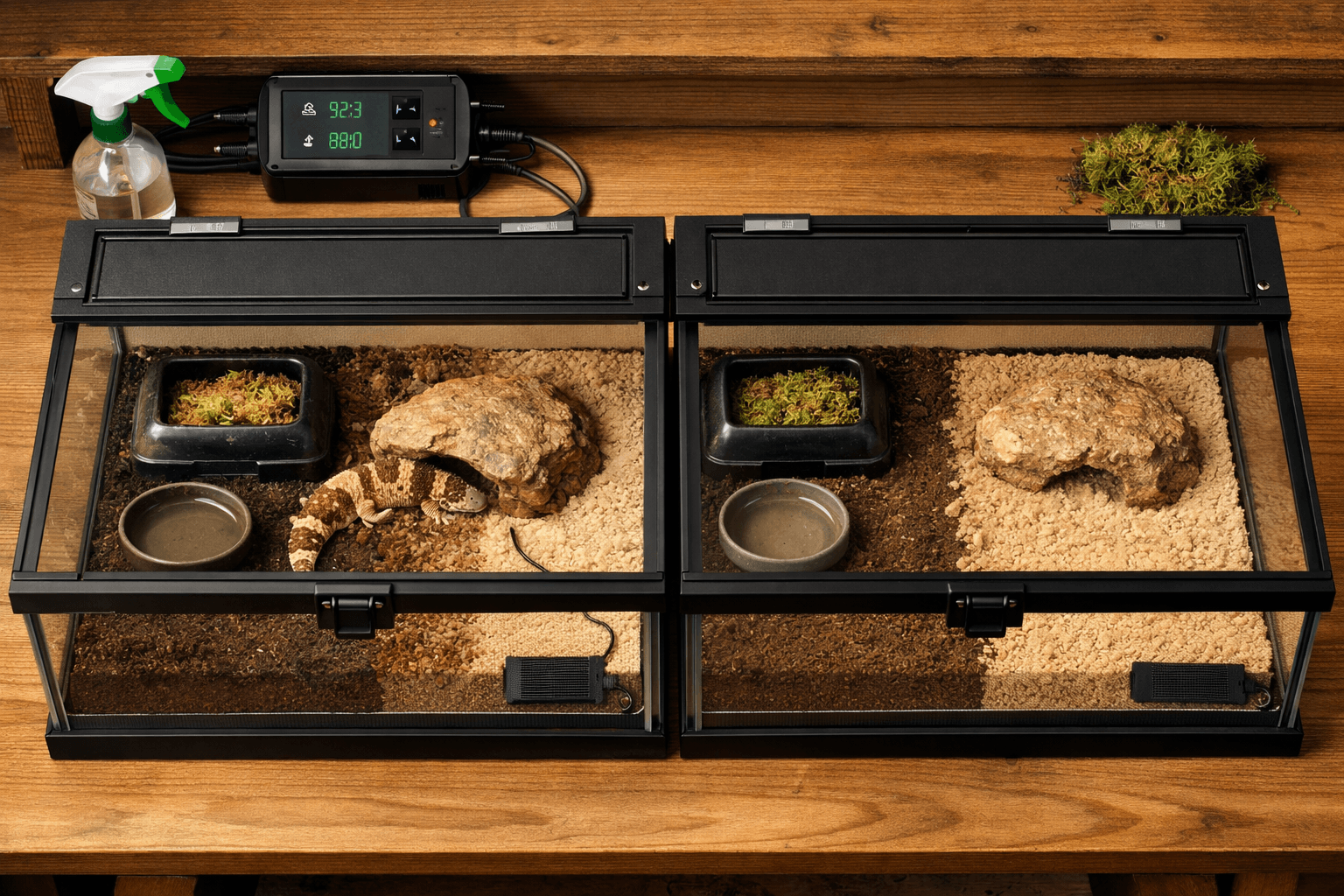
House one gecko per tank as your default plan. Fat-tails are territorial, and males will fight — sometimes badly enough to cause tail loss or worse.
Females can sometimes cohabitate in a large enough enclosure, but it’s not guaranteed to go smoothly. If you want multiple geckos, budget for multiple tanks rather than gambling on peaceful roommates.
Humidity and Heat: The Part Most Guides Get Wrong
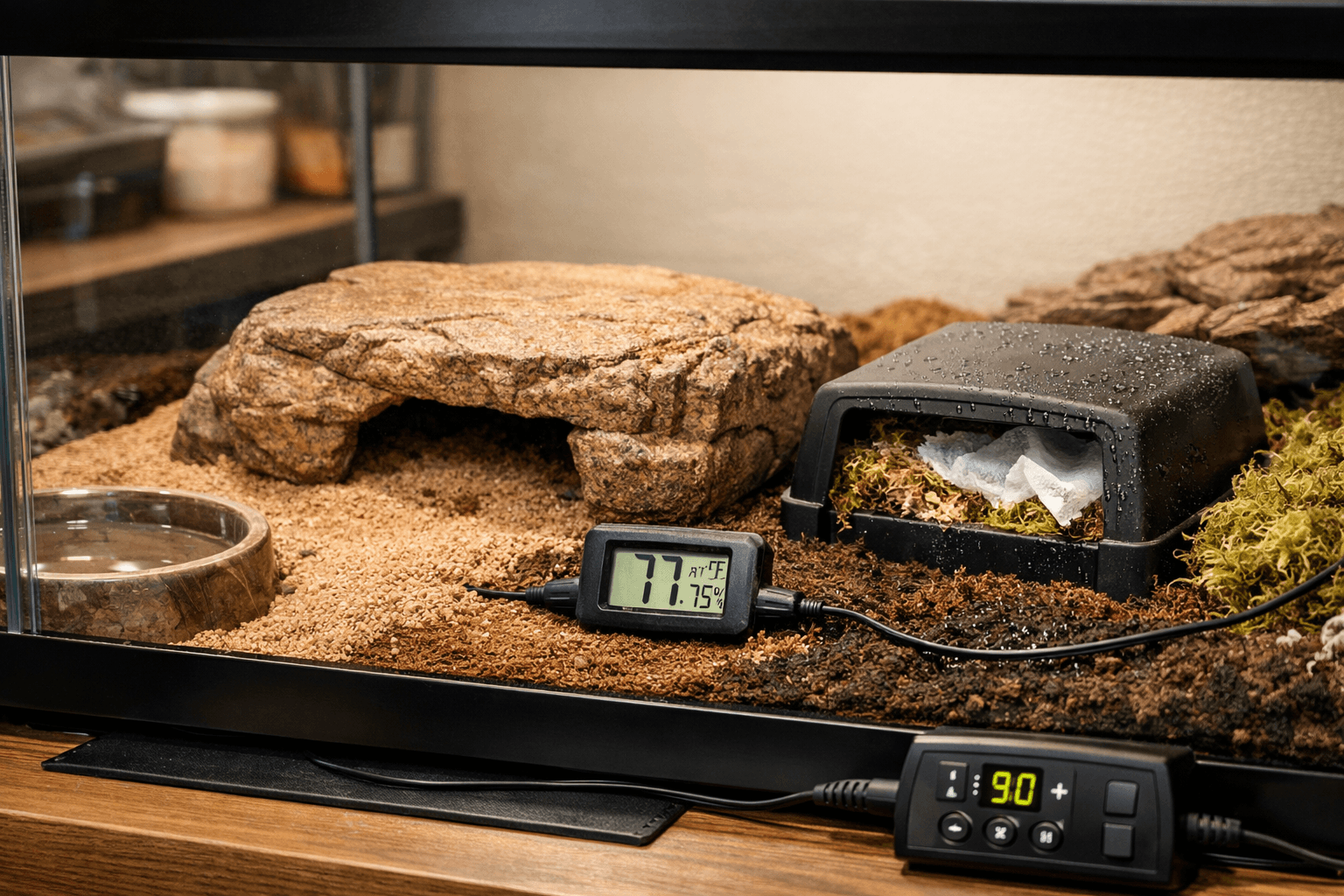
Fat-tailed geckos need humidity between 50% and 70%, which is much higher than the 30-40% typical leopard gecko advice. This is the single biggest mistake new owners make, because most gecko care guides get copy-pasted from leopard gecko sheets without adjusting for species.
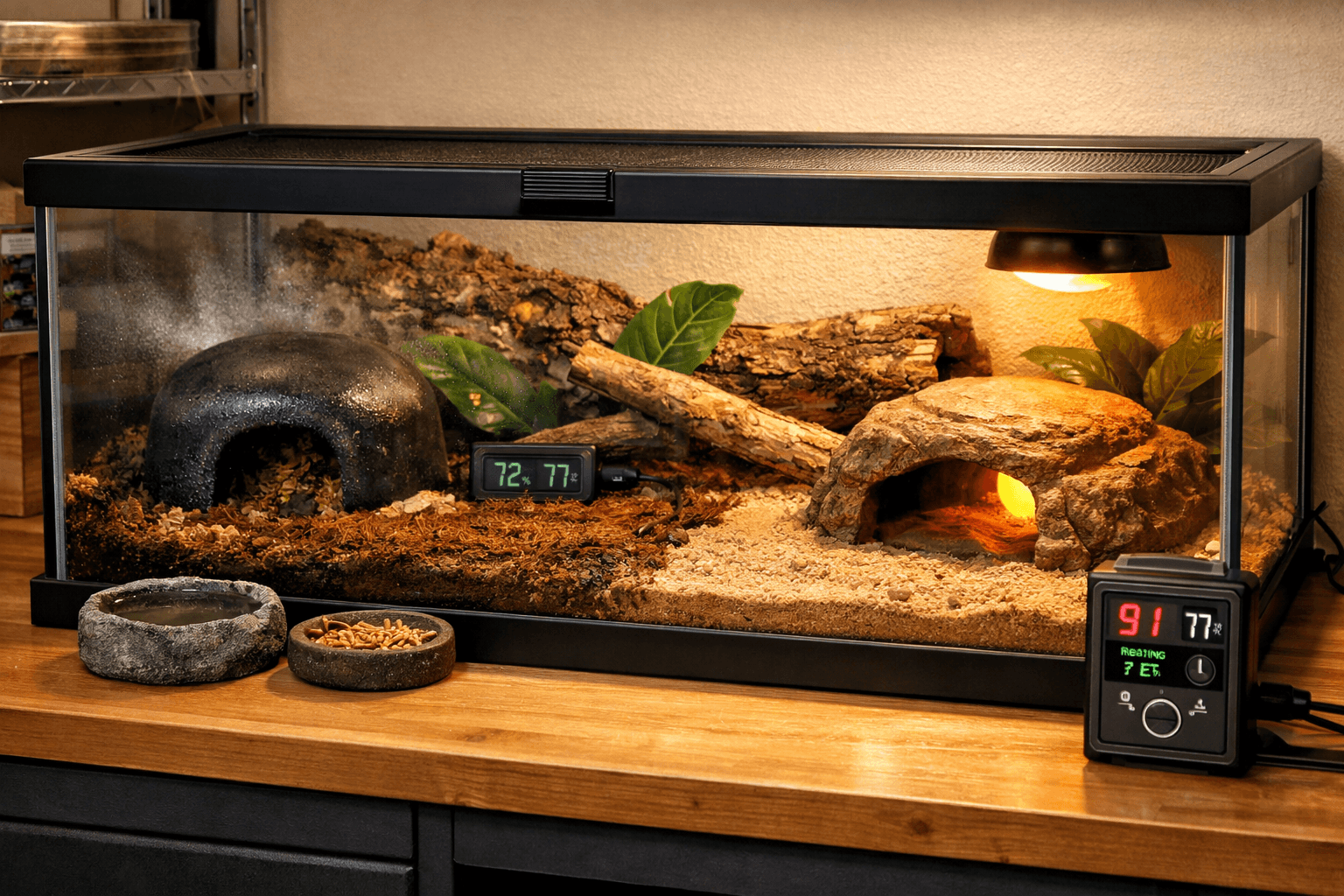
Treat your setup like a humid-desert hybrid, not a strict desert tank. That means a moisture-retentive substrate zone on one side and a drier basking area on the other, giving your gecko a real choice.
For heat, run a warm side around 88-90°F on the surface, using an under-tank heater or a low-wattage heat mat controlled by a thermostat. The cool side should sit in the mid-70s. Never skip the thermostat — an uncontrolled heat mat can easily overheat a glass tank and cook a gecko that can’t escape the hot zone.
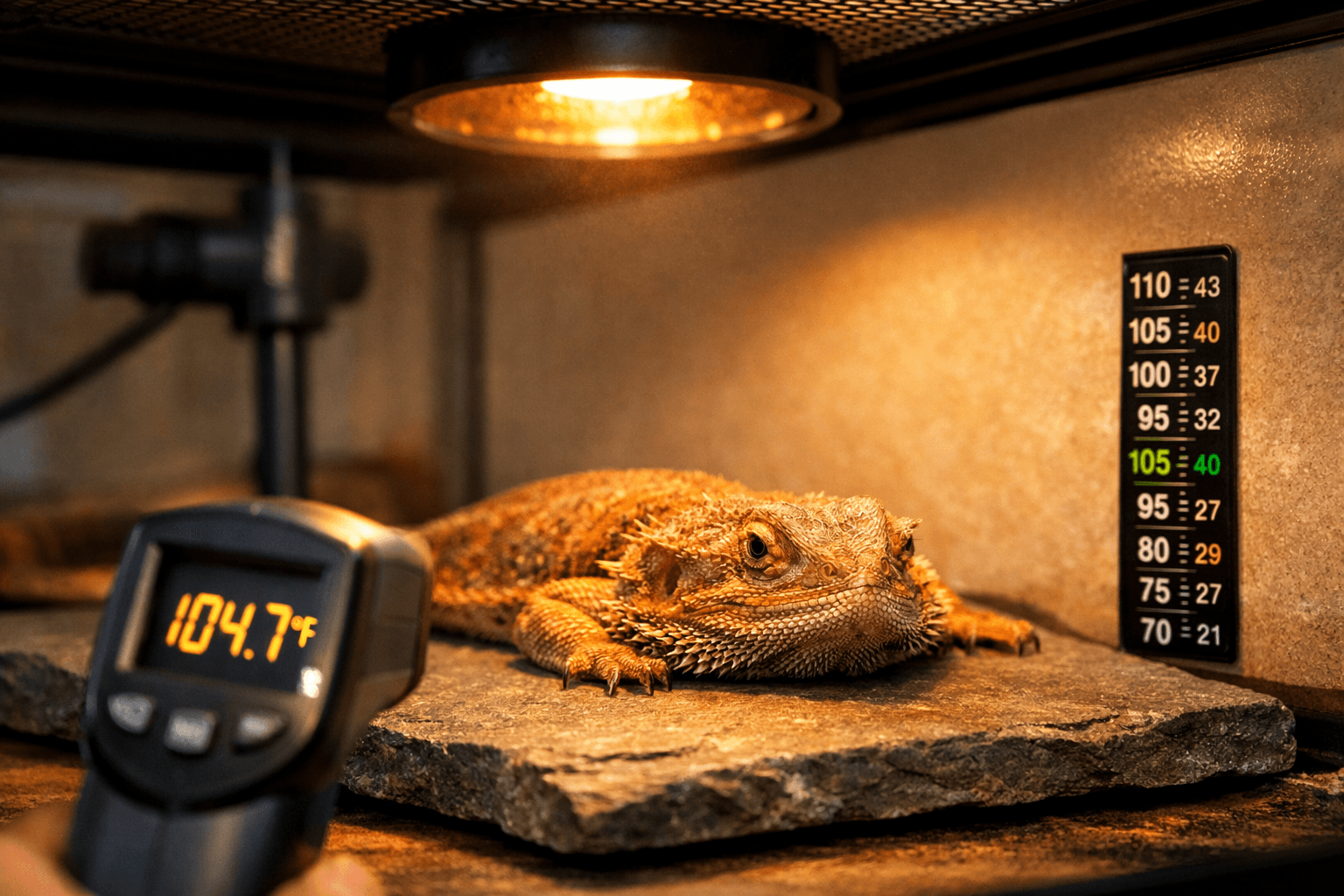
A lot of owners also copy bearded dragon setups by cranking basking temps way too high. Fat-tails aren’t desert baskers. They’re nocturnal, ground-level animals that just need gentle, steady warmth, not a blazing hot rock.
Substrate and Humid Hide: Getting the Moisture Zone Right
Skip loose sand and calcium sand completely — both carry real impaction risk if swallowed during feeding. A mix of organic topsoil and coconut fiber (something like Eco Earth) holds moisture without the same danger.
Building the Humid Hide
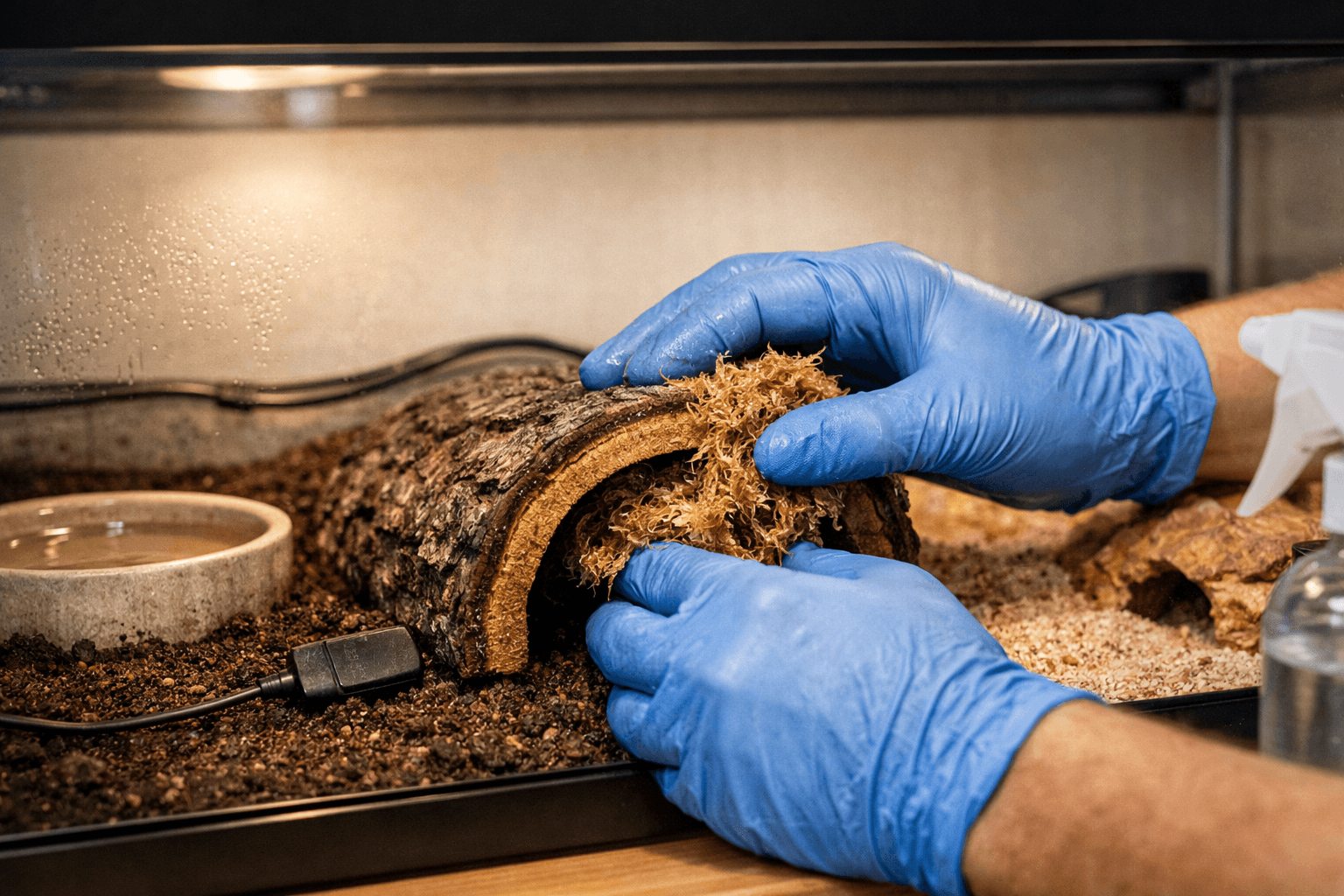
Every enclosure needs a humid hide, a small enclosed box packed with damp sphagnum moss. This is where your gecko goes to shed properly, and it’s the single easiest fix for chronic shedding problems.
Check the moss every 2-3 days and re-mist when it starts drying out. In a glass tank this might mean daily misting in dry climates; PVC tanks usually stretch that to every other day.
Bioactive vs Simple Setups
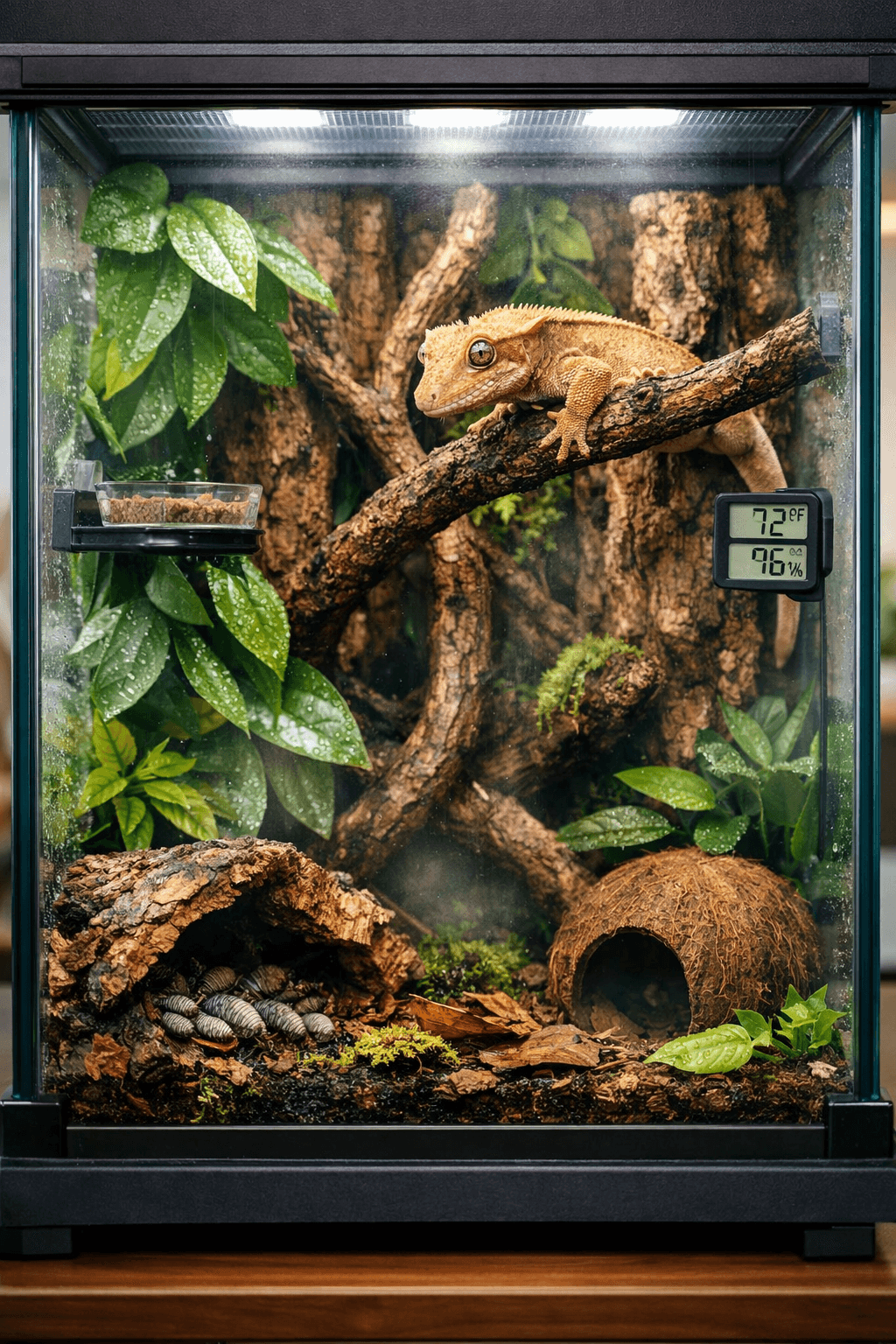
A bioactive setup uses live plants, isopods, and springtails to process waste and hold humidity naturally. It’s more work upfront, usually a full weekend to build right, but it keeps humidity stable without constant misting.
A simple setup with paper towel or a basic substrate mix is easier to clean and manage for beginners. Either works, but bioactive tanks tend to solve the humidity problem almost automatically once established.
Lighting, Decor, and Feeding Setup
Low-level UVB benefits fat-tailed geckos even though they’re nocturnal — don’t assume they need zero lighting. A low-output UVB bulb, something in the 2-5% range, run for about 10-12 hours a day supports long-term bone health and calcium metabolism.
Decor should include at least two hides, one on the warm side and one on the cool side, plus the humid hide as a third option. Cork bark, flat rocks, and leaf litter give your gecko places to feel secure.
Here’s a basic setup checklist to run through before your gecko moves in:
Enclosure sized at 20-gallon long minimum for adults
Substrate mix of topsoil and coconut fiber, no loose sand
Under-tank heater connected to a thermostat, warm side 88-90°F
Humid hide with damp sphagnum moss
Low-level UVB bulb on a 10-12 hour timer
Shallow water dish, refreshed daily
At least two additional hides plus decor
Feed juveniles crickets or dubia roaches dusted with calcium every day; adults do fine every other day. Keep a shallow water dish available at all times, and dust feeders with a vitamin D3 supplement about once a week to back up that low UVB exposure. Readers building out other gecko species tanks, like crested geckos or leopard geckos, can find comparison guides over on petterrarium.com if they’re weighing which species fits their setup style.
Frequently Asked Questions
Why does my fat-tailed gecko keep having shedding problems?
Shedding trouble almost always traces back to low humidity. Check that your humid hide stays consistently damp and that overall tank humidity sits between 50% and 70%, not the 30% range typical for leopard geckos.
Can I keep an african fat tailed gecko with a bearded dragon setup I already own?
No, don’t reuse a bearded dragon tank as-is. Bearded dragon setups run too hot and too dry; you’d need to add a humid hide, lower the basking temp to around 88-90°F, and swap any sand substrate for a moisture-retentive mix.
Do African fat-tailed geckos need UVB lighting?
Yes, a low-level UVB bulb around 2-5% output helps long-term, even though they’re nocturnal. Skipping it entirely isn’t fatal short-term, but it can affect calcium metabolism and bone health over the years.